The Informant
Revolutionary to rat: The uneasy journey of Brandon Darby
By Diana Welch, Fri., Jan. 23, 2009


Last year on Aug. 28, eight Austin activists traveled north in a rented white van to join thousands of protesters in St. Paul, Minn., for the Republican National Convention. In the trailer behind them were shields homemade from traffic barrels – cut in half, painted black, and fitted with Plexiglas windows. The shields mimic police riot gear and are often used in "black blocs," a method of street protesting with origins in Germany that became prominent stateside at the 1999 Seattle World Trade Organization protests, during which a black bloc caused property damage to various businesses. The black bloc is sort of like the punk rock version of protest, and its alluring combination of direct action and danger similarly attracts mostly young, white men.
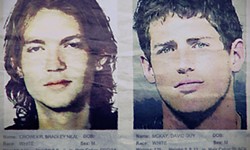
On Aug. 31, a couple of days after the group's arrival in Minnesota, St. Paul police searched the trailer without a warrant and seized the shields. The next day, two of the van's passengers, David McKay, 22, and Bradley Crowder, 23, were arrested for disorderly conduct. McKay was released later that day, but Crowder remained in jail. According to a subsequent police affidavit, McKay met the next day with fellow activist Brandon Michael Darby, 32, who had also traveled to St. Paul with the Austin group. Angry that his friend was still being held, McKay told Darby that he and Crowder had made some Molotov cocktails (i.e., bottled gasoline bombs) and that he was planning on throwing them at cop cars parked in a parking lot.
According to the partial transcript in the affidavit, Darby asked McKay, "What if there's a cop sleeping in the car?" "He'll wake up," replied McKay. "What if he doesn't?" Darby asked. McKay was silent. Darby pressed on, asking McKay if he would "leave the scene with a cop burning or dying." McKay answered, "Yes." And then, again, according to a partial transcript of the recorded conversation, McKay told Darby that it was "worth it if a cop gets burned or maimed." These words, along with eight Molotov cocktails found in the basement of the house in which McKay was crashing, have him facing up to 30 years in federal prison for charges related to possession and assembly of "unregistered firearms," as the weapons are defined by federal law.
McKay did not know that his words to Darby, spoken in a moment of foolish hotheadedness that his friends say he is known for, were being transmitted to agents of the Federal Bureau of Investigation via electronic surveillance gear that Darby had hidden out of sight. Nor did he know that Darby had supplied the FBI with the information that led to the seizure of the homemade riot gear. Moreover, Darby had already told the feds that, in retaliation for the cops' apparently illegal bust, the group had gone to Wal-Mart with a shopping list that might have supplied a touring Roller Derby team – elbow pads, gas cans, bike helmets, motor oil, tampons – but included also the potential fixings for some Molotov cocktails. The youths' recklessness, as well as their implicit trust in Darby, had led them into a police trap.
Who Is Brandon Darby?
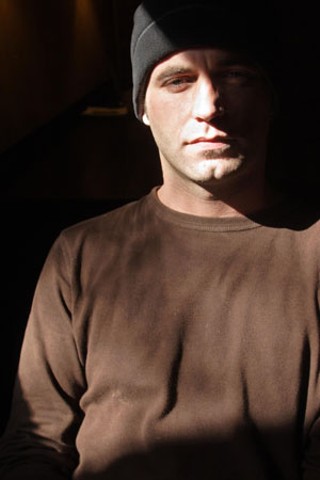
At first glance, Brandon Michael Darby seems a typical Austin lefty activist. He entered Austin's radical progressive scene nearly a decade ago; through a former activist girlfriend, he became involved in a variety of small groups engaged in progressive projects: getting dirty drug needles off the streets, innocent prisoners out of jail, and recent immigrants into stable homes. He's a boyishly handsome guy, in good shape from martial arts training, and he currently lives on several acres of farmland beyond the city limits, where he keeps chickens and a pig. He says he's planning on getting a goat and has a "massive compost operation" going. He talks excitedly about making his home more sustainable and about the impending installation of a solar water heater. He collects rainwater for the garden and is restoring an old house.
Darby's now employed as a legal and investigative assistant for an attorney, work that he feels good about because, he says, his employer doesn't buy in to the whole "how much justice can you afford" system and does a lot of pro bono work. He recently became a father, to 9-month-old Olivia, and though he and Olivia's mother don't live together, he says that they are "co-parenting." All in all, a contemporary portrait in progressive rationality and sustainable ambitions.
Prior to his latest incarnation, Darby had also acquired a considerable national reputation as a valiant and committed community activist, especially in New Orleans. There, initially in the wake of Hurricane Katrina, he had helped rescue stranded residents and rebuild housing and had been centrally involved in the work of the Common Ground Relief – a community effort focused on restoring neighborhoods, defending residents' rights, and trying to rebuild the community from the ground up. Darby was featured in national interviews about post-hurricane New Orleans and more particularly had a reputation for defying authority and especially cops – not necessarily the profile of a potential police informant.
But ask around Austin activist circles, and a more contradictory portrait emerges. Several local activists describe Darby as a troubled, paranoid man with a volatile history with women, a penchant for violent rhetoric, and a strong authoritarian streak. At best, Darby might be just an ordinary and confused young person, fired with generalized idealism and stumbling through this world on his own tangled, misguided mission to save it. But at worst, he might have been – might have become over the last several years – a manipulator with a hero complex, bent on inflating his own self-importance in the comfortable guise of moral superiority.
Finding Common Ground
For much of 2006, Darby was heavily involved with Common Ground Relief, the post-Katrina recovery effort that has gained national attention for its endeavors. Darby himself came to national attention when he and one of Common Ground Relief's founding members, Scott Crow, the prominent anarchist community organizer behind a host of Austin organizations including Radical Encuentro Camp, Ecology Action, and Treasure City Thrift, traveled to New Orleans right after the levees broke in search of their friend Robert "King" Wilkerson, who had stayed in his home to weather out the storm.
Crow's detailed account of the apocalyptic journey, "It Takes a Spark to Start a Prairie Fire: Desperation, Racism and the Beginnings of Common Ground Relief," can be read in full at Infoshop News (news.infoshop.org). (Crow's book, Black Flags and Windmills: Anarchy, Hope and Common Ground, which also recounts the episode, comes out this year.) Their first effort failed, but the two friends decided to try again when they got a call from Malik Rahim, a former Black Panther, community organizer, and childhood friend of King's, who reported that his neighborhood, Algiers, was being patrolled by white militias harassing unarmed black residents. The men set out once again, this time determined to bring supplies and aid to Rahim and to bring King back to Austin.
It was on this second trip that Rahim and Crow planted the seeds for Common Ground Relief using, Crow writes, "a strategy mixed from the Black Panther survival programs, the current work in Chiapas, Mexico of the Zapatistas and good old community organizing." It was also when Darby made national headlines by taking a dip into the dreaded "toxic sludge," a gnarly mix of industrial waste, waterlogged carcasses, and other nastiness, to find King. Crow writes: "Brandon called me one last time before he dropped into the dark water, and Malik and I told him we would come looking for him if he didn't return. He started swimming with his phone held in the air, and he made good progress alternating between wading and swimming, trying to keep the water out of his mouth." Federal Emergency Management Agency agents spotted Darby and ordered him out of the water, but he would not do so until they dispatched a boat to find and retrieve King; a hero's welcome awaited Darby when he and King returned to Rahim's home. After celebrating the reunion, everyone went to work, doing what they could to put the world right again.
At the time of Common Ground's inception, the mood in New Orleans was tense. The U.S. government had completely failed the community, all the proof that most people needed that the system wasn't working. Revolution was in the air, and Common Ground was at the forefront of envisioning a potential new world. In that heady atmosphere, Venezuelan President Hugo Chávez offered the group monetary relief in the form of Citgo gas cards, and Common Ground sent a delegation, including Darby, to Caracas. On pirate radio, Crow described Common Ground as "a paramilitary organization" – a statement for which he was criticized within the group. But given the atmosphere of chaos and devastation and uncertainty, people behaved in ways they normally would not.
As for Darby, those who were involved in Common Ground describe him as a simultaneously dynamic and divisive character, with an authoritarian streak that the mostly anarcho-hippie crowd didn't care for. One volunteer coordinator who worked with Common Ground from January to July 2006 recounted a disturbing episode: A couple of volunteers called back to headquarters concerned they were about to get jumped, and Darby leaped into his truck to save the day – reportedly by firing his gun into the air in the middle of the street. "It just seemed like an unnecessarily violent escalation," she recalled. "Everything I heard about Brandon Darby during my time at Common Ground was that he was crazy, and what I witnessed was that he was very prominent and very divisive. He'd come into town and everybody would be whispering, like: 'Oh, shit. Brandon Darby's back.' "
Darby explains the perception of him as authoritarian this way: "For some, Common Ground might have been about creating a little anarchist utopia. For me, it was about helping people have their rights heard and have their homes [restored], and it was about getting things done." Darby also denies that he has ever discharged a firearm anywhere in the state of Louisiana.
"I know that Brandon has been trained in firearm safety, and I just don't see him doing that," says Andy Gallagher, a New Orleans resident who's known Darby since he was 18 and who has lived with him in the past. "In all honesty, there have been situations that I have witnessed where Brandon has had a gun on hand and used it [in] a way that actually de-escalated the situation and protected the lives [of those] who were with him." Though Gallagher wasn't involved with Common Ground, he was in town at the time doing his own aid work – locating displaced foster children – and would often visit Darby.
Another prominent organizer of the Common Ground effort was Lisa Fithian, who says she has never gotten along with Darby. "He was a leader of the organization, though, and because of that, he was able to set some patterns in motion that I believe led to systemic issues of sexual abuse, sexual harassment, and violence," she says. "He kicked the door down of a women's center at 2am to throw a guy out; he kicked in the door of a trailer where there were volunteers with guns on them. He did a lot of Wild West shit – Mister Macho Action Hero."
Darby responds that this portrait is both inaccurate and unfair. "We were in an aggressive situation that was frightening; we felt like it was the end of the world," he explains. "So if there is a man living in a women's center illegally, against the wishes of the women in the center, and all of the women exit that center, leaving that one guy who barricades himself in and is pissing and pooping on the floor, I think it's totally fine to kick down the door. But really, if I was so bad, why was I the spokesperson for Common Ground Relief for so long?" Darby asks. "Why, after 2006, did they have me come back and ask me to direct the organization and be the spokesperson again?"
In retrospect, Darby's friend Crow adds his own doubts. "He inserted himself as 'co-founder'; he wanted that status, even as people were getting written out of the Common Ground history, people who did a lot of work organizing. He also made sure that the media followed him extensively and didn't interview other people when he was director and also when he was just another person around," insists Crow. "If you look at the way Brandon tells it, he did the whole Lower 9th Ward with one hand tied behind his back, when really there were a lot of people who did the work, and the organizing too, who you'll never hear about because of Brandon's monopoly on the media. So, did he do that just because he's crazy, or did he do that to get more credibility for himself so that he could gather more information?"
Bad Intentions
Malik Rahim now fervently believes that Darby was an informant for at least part of the time he worked for Common Ground, a conclusion he describes as heartbreaking. "Look, Brandon and Scott brought weapons to my house to help me defend my home," he says. "So my first feeling for both of them was love." But that love, Rahim laments, soon turned to blind defense of someone with whom many in the organization, including his own family members, had problems. "It came to the degree that my son just knew that there was something too wrong with Brandon, and he searched Brandon's possessions, because he said, 'This guy is an agent, or he is an informant,'" Rahim recalls. "And, let me tell you, it caused a rift between my son and I, so much so that eventually, he left. Because I believed Brandon. I defended him."
Rahim believes that something happened to Darby while he was in Venezuela and that it was then that he became an informant, because that is when Rahim now sees that Darby began to impede the group's progress. "I think that Brandon had a nervous breakdown in Venezuela and that when he came back he was messed up in the head," Rahim explains. "At the very beginning, he was helpful, but after Venezuela, he became harmful. ... He did everything he could to destroy St. Mary's, which was where we were housing the majority of our volunteers, by letting a bunch of crackheads move in there. And he also drove a wedge between me and Lisa Fithian and eventually caused her to leave, too. He was doing everything you're supposed to do as a government agent in that situation. Divide and conquer."
What Rahim considers sabotage and what Fithian calls patriarchal power plays Darby just sees as trying to do something good in a bad situation. Though he disagrees that his adamant refusal to turn people away from St. Mary's was harmful, he agrees that something bad really did happen to him in Venezuela and that he came back a changed man. "I probably should have left New Orleans at that point and come back to Austin and gone to therapy. But I didn't. I stayed," he says. "I didn't want to be there, but I thought I should have been there. Maybe that was my biggest mistake." While in Venezuela, Darby says, he was informed by "someone in the Venezuelan government" that what he was doing – essentially seeking funds from the Chávez administration to undermine the Bush administration – was illegal. Darby freaked out and says that at times he was frightened for his life. He thought he might be arrested when he returned to the States, and he was angry that he had been put in that position by Common Ground, particularly Crow and Fithian. But he swears, again and again, that he was never working for the federal government while in New Orleans. Not ever.

Though he refuses to give a start date, Darby says he's been working with the FBI for less than two years. FBI documents have him making phone calls to the bureau beginning in November 2007. Though he still describes himself as a lefty and says he's "the furthest thing from a Republican," it was protecting the rights of Republicans, he says, that finally persuaded him to work with the feds. "One morning, I woke up and realized that I disagree with the group I was associating with as much as I disagree with the Republican Party," he recalls. "I began to feel that a small select group of people had bad intentions, and I felt the need to do something about it."
The relationship began with a call to a cop that Darby knows in another city, because, he says, there was a situation that needed to be reported. He told that person what his concerns were, and that cop gave him the name of a federal agent. Darby says he met with some federal agents, told them what he had to say, and left. The agent later contacted him again, they had what Darby says was a "good conversation," and over the course of a few months, Darby agreed to go undercover. Though he won't say what it was exactly that made him make that initial call, he will say this about the eventual decision to go undercover: "My deal was with a small group of people whom I personally wouldn't call terrorists but whose views and ideologies, in addition to their actions, are a little bit frightening and not in the best interest of the world. ... So, with that said, I did what I can to make sure that that's not an issue. Because I felt like I owed that to life, and I felt like I owed it to this little collective we call a nation who are trying to get through the world together."
This sudden bout of patriotism sounds odd coming from a guy who witnessed complete governmental breakdown in New Orleans and went to Venezuela with revolution on his mind, but Darby says that it was those very experiences that added to his shift. "I think I began to see things very differently as a result of my experiences around Hurricane Katrina and the aftermath and my experiences as a person of leadership in a large organization. I saw the absolute importance and the absolute negative effect that happens to individuals or groups whenever there's no stability in a system," he explains. "I began to feel that we as a radical, radical left, because of the way we pseudo-governed, I started to feel like we were a little silly, critiquing the U.S. government, when we had so many faults of our own."
Soul on Fire
Some people who worked with him are frankly suspicious that Darby's acknowledged collaboration with the FBI hints of something much larger and more sinister. Some Austin activists have formed the Austin Informant Working Group; currently focused on the McKay and Crowder cases, they are also considering the wider implications. The term "Green Scare" (by analogy to earlier anti-communist "Red Scares") refers to the federal government's growing interest in prosecuting environmental activist groups, particularly the Earth Liberation Front and Animal Liberation Front. Austin Informant Working Group member Simon Evans points to a report by former University of Texas law student Elizabeth Waggoner, who said that FBI agent Charles Rasner announced to her class that Food Not Bombs and Austin Indymedia were on the bureau's terror watch list. "It doesn't seem unreasonable to question," says Evans, "whether or not something larger is at play here."
"They're going after me and Scott and other organizers, but they nabbed the low-hanging fruit," said Fithian, who was also involved in the RNC protests in Minnesota. Fithian was not surprised at the news that Darby was an informant. "I always said at Common Ground: If he was not a cop or an agent of the state, he was doing their job for them, creating division and disrupting our work."
Crow initially came to Darby's defense, posting a strenuous denial, when a story in the St. Paul Pioneer Press first fingered him as an informant, based on FBI documents. "It was more about defending the truth than it was about defending Brandon as a person," says Crow. "When I asked him, he told me it wasn't him, and I believed him. I've had to apologize to people like Lisa, because I gave him credibility with my initial statements. I just wanted to make sure he wasn't being maligned. Now, I didn't defend his misogyny or his antagonism; I defended him based on what he told me. It's still heartbreaking, you know." Darby eventually wrote an open letter coming out as an informant, but Crow first learned the truth by reading FBI documents furnished to him by McKay's defense team. Crow was hurt by the news, as this wasn't the first time he had found himself defending Darby.
"A lot of women had been hurt by this man, and a lot of men had defended him over the years, and it's not OK," says Fithian. "That's a whole part of the healing process that we are going to have to deal with as a community." This sentiment was echoed by other sources who spoke of a particular romantic relationship in Darby's past that they describe as emotionally abusive and Darby as paranoid, jealous, and possessive. "I was a total asshole in my early 20s," Darby admits freely. "My entire adult life has been a process of trying to be less of an asshole. What on earth my penis has to do with this case, I have no idea."
Regarding Darby's obsessive and paranoid nature, Crow says that sometimes Darby would call him 30 times a day. "I'm not a psychologist, but I would definitely say that guy's paranoid. I mean, he sleeps with guns under his pillow. This is not something I have been told; this is something I have seen. The guy has a cache of weapons." This depiction from Crow, who legally owns an AK-47, pisses Darby off. "I have legal firearms that I have a right to own," he says, "and I live out in the country, and I think it's OK. And I did have a gun in New Orleans, and as a citizen I have a right to do that."
Sometimes, when Darby speaks of his old friend Crow, there's a catch in his voice – as when he says that they were close, once, but that Crow hasn't accepted his recent invitation to his home nor met his daughter. "I will always have a bond with him because of what we went through together, and no evil or anything that he would perceive as bad would come from my hand toward that person," he says, sounding sincere. Yet the documents reflect that during 2007, Darby secretly informed on Crow's whereabouts and actions. His defense is that he reported what he saw. "Wouldn't it be more frightening," he asks, "if the person in my position picked and chose what truth they told rather than say the facts?"
"Even though I was a shield for him in a lot of ways," Crow now argues, "he really was marginalized in our community. A lot of people wouldn't work with him on stuff, and even I didn't have anything to do with him for a year before Common Ground, because he would start getting paranoid and do divisive things, like tell everyone that Lisa was out to get him, for example. For one period in New Orleans, he started to get King to think that Lisa and I were colluding against him – and I took Brandon's calls more than anybody would. I counseled that guy many times and actually considered it more of a mentorship than a friendship. That guy asked me a lot of questions. And now of course, it all makes sense."
So when he had his personal epiphany, why didn't Darby reach out to other activists and tell them about his change in world-view – rather than begin spying on them? "If I felt like the best thing I could have done to right my wrongs was to come out and say how I felt, I would have done so. I just didn't feel like it was. I felt like I would be completely marginalized and nobody would want to hear my opinions." Darby uses the controversial civil rights leader and Black Panther turned Republican born-again Christian Eldridge Cleaver as an example. "He wrote a book called Soul on Ice, and it sold a million copies and is touted at all the anarchist bookstores. Most people in radical communities have heard of it. Then, if you say to an auditorium, 'Have you ever heard of a book called Soul on Fire?' No. That's when Eldridge Cleaver became a born-again Christian and changed his views and recanted much of what he had earlier believed. They don't promote it. Just like the school board: They promote a version of history that isn't historically accurate." Like a petulant teenager whose parents just don't get him, Darby adds: "Nobody lets you voice your opinions. Nobody cares. Nobody wants to hear it."
Pissed Off and Pissed On
Fithian says she was wary of Darby's presence in Minnesota last September. "Nothing about Brandon going to the RNC made any sense to me, and I spoke out about it, and I warned people. When he came to meetings, I actually asked, 'What the fuck is he doing here?'" She says she pulled him aside and asked him to leave communication meetings where strategic details of actions are worked out. "He said he was there to do medical, but instead he was at all the meetings, all the comms. When he stood up at a spokes meeting [i.e., organized like 'spokes' on a wheel], I told him he needed to leave."
Gabby Hicks, a 21-year-old activist who traveled in the van with Darby, McKay, Crowder, and others, said that the Darby in the open letter – who sounds like a thoughtful guy opposed to violence – is very different from the argumentative and nonsensical Darby she met. Once, on the drive up, Darby became agitated because he needed to go to the bathroom. "He at one point threatened a driver of the van, because the person didn't pull over fast enough, and Brandon was literally yelling, 'I'm a 31-year-old revolutionary, and you can't tell me when I can or can't pee!'" Hicks laughed. "Once we pulled over, they were still fighting, and someone asked if they needed mediation. Brandon was like, 'I can put it behind us if we can all act like adults.' He turned the whole thing around and acted like we were the ones who had freaked out. That was his tactic. It was just weird."
At the heart of the Darby story remain those two young men from Midland, Texas, Bradley Crowder and David McKay, who are currently facing years in federal prison based in no small part on information that Darby gave to the FBI. Though there are no legal restrictions preventing Darby from commenting on the case, he says he declines to do so out of "respect for the bureau." Darby is a decade older than either defendant and, as far as direct action is concerned, much more experienced. So why didn't he simply try to talk these guys out of doing something stupid or criminal instead of turning them over to the feds?
"Why didn't I try to discourage them? You don't know that I did or didn't," Darby insists. "For all you know, I could have gotten in trouble for violating the rules and trying to discourage somebody from doing something. I'm just saying you don't know what the facts are yet."
Indeed we don't, says Evans of the Austin Informant Working Group. "There is still the issue of entrapment: I want to be clear that we may never know Brandon Darby's full role or motivations in this incident, as these details are omitted from the FBI documents and informant reports provided to the defense. But something I keep coming back to is: What would I have done in the same position? I consider myself a moral and ethical person; I believe in nonviolence; I'm an 'anarchist.' What I would have done is talk to anyone thinking of illegal action, weigh in with my experience, point out the potential consequence, and dissuade that person. If that didn't work, I would have prevented them from purchasing the materials or going on the action. I feel that a strong community can educate and police itself."
Darby rejects the depiction of McKay and Crowder as kids easily influenced by an older activist. "If these two 'kids' had been stopped in the midst of a plot to bomb an abortion clinic, all these same people would be like: 'Why wasn't the government watching these people? Why weren't they involved?'" he says, exasperated. "The guys who dragged James Byrd to death were the same age as these two, and they weren't kids; they were monsters." (Actually, two of the perpetrators in Byrd's 1998 murder in Texas were 24; the third was 32.) In any case, Darby is sticking to his story. "In regards to this case, there's no evidence that shows that I assumed a leadership role, and I didn't," he says. "I didn't encourage anybody to do anything, and if you think that I should have done everything I could have to talk these guys out it, you're not going to be let down [as the trial proceeds] a month from now."
Good Career Move
Whatever his current motivations, Darby acknowledges his past mistakes. "When I was younger, I identified as a revolutionary, and I believed that many people around the world had a right to take up arms against oppression," he says. "But I mistakenly felt that our system was one where that would be appropriate." Then why does he feel that he deserved the benefit of maturity and hindsight, when McKay and Crowder deserve multiple years in the pen? How does he justify robbing them of their chance to go through their own maturing process and personal evolution of political ideology? "Because I didn't actually do any of it," he says. "Because I always had enough sense to know that I didn't have the wisdom to make decisions that endanger people's lives."
Darby does say that McKay and Crowder were not the focal point of the investigation. In the course of an ideological shift that took him from armed revolutionary to FBI mole, Darby says he began to see major problems with certain actions that were being planned for the Republican National Convention – particularly by the black bloc and a group of organizers calling themselves the Welcoming Committee. "Anytime that a group of people get together and say that they are going to use 'any means necessary' and have images of firebombs and all kinds of other things on their website and they organize around the country, not to protest but to specifically prevent another group of American citizens to exercise their right to assemble, the U.S. government is going to get involved," he says. "And they should get involved, and I support it wholeheartedly."
Crowder and McKay, he suggests, were just in the wrong place at the wrong time, adding, "Then, if at the very end of an investigation like that, as a complete shock to everybody, a group of people decide to do something that's insane, they're going to get in trouble for it."
None of this fully explains why Darby chose to go undercover as an FBI informant and surreptitiously spy on his friends when he could have instead simply left the movement and tried to get involved in public policy in some other productive way. "I've watched countless activists begin to work in the Legislature and begin to do things that participate in the system; we have a system that is wide open for our involvement," he said. "You can get involved and have a say so; if you disagree with the way our city is run, you can get involved. If you have an ideological bent that's on social justice, you can become a law enforcement officer, you can get involved with the FBI, or a lawyer."
Darby says he was indeed compensated at times for his work with the feds, although he's vague on the details except to say he turned down witness protection and a lump sum offered to people who testify in federal cases. He does say he is able to be independent because he has some money from his family. Darby sees his current role with the FBI as something akin to a "volunteer firefighter" and believes it to be a natural extension of his desire to do what's right, no matter how uncomfortable. Yet with his decision to go undercover instead of any other of the myriad choices he had to change the direction of his life, Darby has effectively reinforced the notions that many in the activist community already had: that the Man is always out to get you, and you just can't trust anyone.
Activist, adventurer, hero, revolutionary, informant. For his next transformation, Darby sees a future for himself in law enforcement. His first gig was surely a foot in the door.
For more documents and background on Brandon Darby, see the sidebar, "Informing Documents."
Got something to say on the subject? Send a letter to the editor.