





Listen carefully during Australian psychological horror Rabbit, and you may recognize an unexpected soundtrack component: a very unusual cover of “Ohne Dich” by German industrial metal band Rammstein. Its inclusion was a curious accident, a moment of experimentation between star Veerle Baetens and writer/director Luke Shanahan. He said, “We were talking about what she was going to sing, and we had a list of obscure folk rhymes, and little nursery rhymes, and Belgian songs. We were going through our record collections on set, and we’d decided on a little Hans Christian Andersen kind of song. But then we listened to that song, and she started singing it, and started becoming it. It was like a ‘Singing in the Rain’ moment in A Clockwork Orange, when Alex is kicking the guy.”
It may seem like an odd intrusion, but for Shanahan its message of loss, individuality, and duality spoke to his script’s underlying obsessions. “If you read the lyrics, it’s ‘with you, without you,’ there’s reference to a forest. It could almost have been written for the film.”
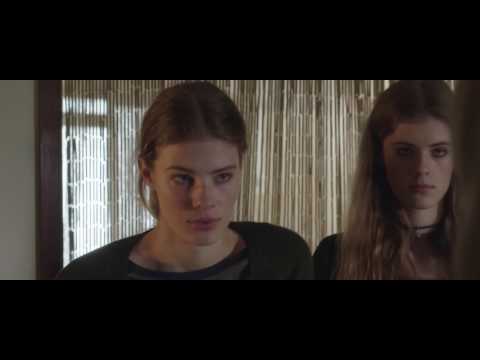
Australian horror is undergoing a resurgence through visceral character studies like Wolf Creek and Hounds of Love. However, Shanahan described his film as “not a conventional genre piece. It’s not a body count film, it’s not a buckets of blood film, it’s not a drive-in movie.” Instead, his tale of two twins (both played by Rectify star Adelaide Clemens) separated by bizarre events and drawn together by malevolent forces is closer to The Wicker Man and other cinematic fables: “A fairy tale without having to be really raw and obscene with the way that we execute it. The film, I think, is quite beautiful.”
Austin Chronicle: The story is about two halves separated, and you weave that into the narrative structure, told in two acts rather than the more common three.
Luke Shanahan: It’s a two-act play. Somebody described it perfectly and said, “The first half is American, and the second half is European.” You set it up, and you think, “Here’s the mystery, here’s our couple.” Are they going to get together? They go on a road trip, and here’s the bedraggled old detective following on the case, the guy whose marriage is breaking down, and then suddenly you pull the rug out, and turn into some Michael Haneke twisted dream. For me, those two halves are supposed to be two twins that don’t quite marry up, but in a way they do.
AC: What drew you to this underlying idea of mirroring?
LS: I have two sets of twins that I know quite well. One set of twins that are inseparable. The cliche grande, they go everywhere together, they absolutely are entwined. And another set that are just as close on a level where they can read each other’s minds, they can tell when the other one has fallen over, when the other one has had a fight with their husband, but their intimacy has driven them apart. Now we were out one day at lunch, and one of the women said to me, “If she was being tortured, I would feel it.” That was the impulse. That was the line, and I went, “Wow, what about if there was a life-threatening event or some fantastical situation, could that person have the ability to communicate or scream out for help in some telepathic way?”
AC: You mentioned Michael Haneke, and he’s very influential on the directors of what’s been called post-horror, where it’s not the cheap gore, the cheap scare, but more what it says about the character, where tone is everything. In the first half of Rabbit, almost nothing happens to a character onscreen, but there’s this perpetual sense of dread.
LS: After the Q&A at one of the screenings, everyone loved the music, but one person didn’t, and that one person said, “Do you think the music is too much?” And I said, “Well, when did music become this thing that had to sit under?” There’s a sense of dread in that whole first half of the film, and you know they’re going into somewhere perilous. It’s a tip of the hat to Kubrick, that we know this isn’t going to end well.
Music’s become, especially in the Australian world, something which flies in the face of the Christopher Nolan, Hans Zimmer world of “let’s really hit people with it.” The levels here are deliberate. It’s not like I accidentally slipped in the mixing booth and turned it up. I like those cues, and I like the sense of unease that they give you. The Seventies films did that so much, and lately we feel like it’s got to be a seamless or sympatico relationship where you don’t really hear the music, and it’s almost like an underscore.
I went to [composer Michael Darren] and I wanted a John Carpenter-meets-Goblin, Suspiria-type feel, but I also wanted to mix that up. So we go through classical with Mozart and Beethoven, we go to the Baroque era with Bach, “Air on the G String.” We go through those classics that everyone knows, but I wanted to mesh those up and use that as source music within the scene. We have that motif that goes through, those big fat chords. That’s just something that I saw with these images of the forest and Adelaide. When we did testing and we did rehearsals, we played that in the background, just big organ music. So Michael and I just built on that, “Let’s make that brash choice.”
Rabbit
Fri., Sept. 22, 9pmMon., Sept. 25, 2:30pm
This article appears in September 22 • 2017.
