


March 19, 2020, was the day that everything changed for restaurants in Austin. That was when Gov. Greg Abbott issued Executive Order No. GA-08 relating to COVID-19 preparedness and mitigation. That document was the state’s first response to the pandemic and immediately shuttered all restaurants to dine-in eating.
How the restaurants responded, survived, and came out the other side is the subject of To Be Seen. The new documentary by Austinite and first-time director David Liu premieres tonight at AFS Cinema, the first of three screenings around Austin this month.
Liu started production, and the process of becoming what he calls an accidental filmmaker, in late 2021. At the time, his day job was in tech: He had trained in software and hardware engineering and had a successful career in machine learning. However, he became increasingly uncomfortable with the direction AI was taking, and so in late 2024 he quit his job to concentrate on making To Be Seen. “I went through a huge pivot,” he laughed. “It really shows on my LinkedIn.”

As a first-time director, cinematographer, editor, producer, and finally even score composer, everything became a learning curve. First, he had to start applying his filmmaking skills – all acquired through YouTube tutorials. Then came the challenge of conducting his first-ever on-camera interviews. He started with Sarah Heard and Nathan Lemley, chefs at North Loop hangout Foreign & Domestic, who he’d actually got to know one week before lockdown began. “That was the easiest one for me, since I was one of the first people to get to-go from them.”
Next came Fiore Tedesco of farm-to-table and locavore advocates L’Oca d’Oro. Representing Austin’s essential barbecue scene were Evan LeRoy and Sawyer Lewis of LeRoy and Lewis Barbecue, whose story had the additional twist that they were trying to move from a trailer to a brick-and-mortar business. The final interviewee was actually the chef Liu had known longest: Thaison Nguyen, the chef behind Pho Craft. “I went to college with him.” However, Liu wasn’t planning to include his friend of 15 years, as he was actually in discussions with two other businesses about being included “and then suddenly things happened with his restaurant and that became a vital part of the story.”
Liu’s own career pivot allowed him to empathize with the restaurateurs who also found themselves on a new and unexpected trajectory, dealing with a world that had changed rapidly around them in ways they could not control. Liu said, “I thought I was making a film about how the restaurants made it through the pandemic and ended up with a very different film.” Rather than the COVID lockdown being the subject of the film, it became the instigating incident, a way for him to answer a question that had been plaguing him: Why does even a self-described introvert like himself like eating out? The answer became a discussion about how the shared spaces of a dining room and a kitchen become their own communities. “It’s what Fiore says. ‘You don’t need a restaurant to eat.’”
What Liu quickly learned through these conversations was that he was wrong about a core assumption he had going into the interview process. Looking from the outside as a customer, he said, “I could see what they were posting on Instagram, or when I would walk past their restaurant, or talk to them just in passing when they opened, and it was this idea that to-go is the thing that saved them. By the second person of the first interview, I knew I was wrong. By the second interview, I was like, ‘Whoops, I was very wrong, and there’s a different story here, and I guess it’s my job to capture it.’”
The interviews took place across 17 days of filming, with the time spent with each restaurant broken down into a three-day structure: One day of sit-down interviews, one of more verité-style conversations, and finally pickups. However, Liu deliberately avoided any kind of in-the-kitchen filming because it would simply be too disruptive to regular kitchen operations. “You’re asking for their time, and if they lose one day, that can sink their business, which is wild.”
Instead, he did a lot of prep work by visiting each as a diner, effectively location scouting to ensure he knew where the best lighting was and where to set his cameras to be minimally intrusive. “There was a lot of eating involved.”
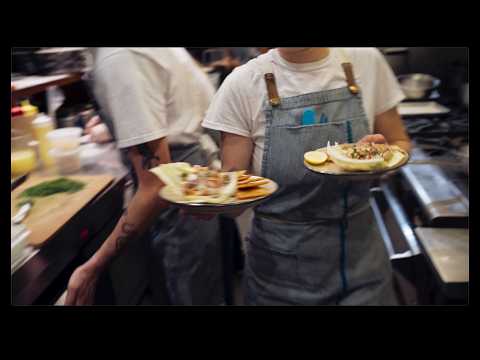
To Be Seen premieres July 1 at AFS Cinema. There will be a second screening July 13 at the Texas Spirit Theater at the Bullock Texas State History Museum (tickets here) and a free public screening July 14 at the Central Library as part of Austin Public Library’s Cooking Club (RSVP here).
