

If anyone was going to launch a podcast about Steven Spielberg, it was going to be Eric Vespe. After all, when your first memory is the coffins popping out of the ground at the end of Poltergeist, the die is probably cast.
And that’s first memory – not first memory of a film. “I was 2 or 3 years old at this point,” said Vespe. “I can picture the apartment, I can picture the tube television, and every time I rewatch Poltergeist and Craig T. Nelson’s coming to the door and JoBeth Williams is trying to get out and the coffin comes up and splits them apart and she calls his name and the door slams, all that takes me back to that moment in that tiny apartment and my mom’s out working her second job to keep a roof over our heads. The teenage babysitter, who seemed like an adult to me but was probably 15, she’s watching a scary movie, thinking I’m asleep, and I wake up for that point.”
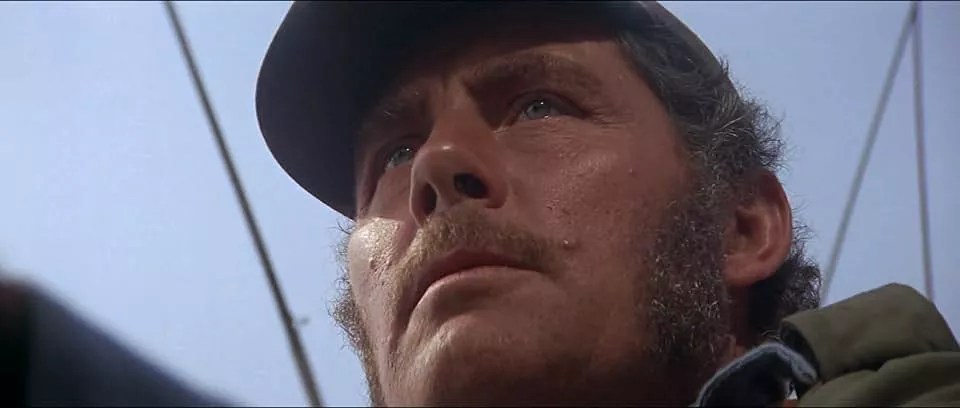
That love of Spielberg has arguably defined Vespe’s life and career. After all, many readers and film lovers got to know Vespe under the journalistic pseudonym of Quint, taken from Robert Shaw’s rough-hewn shark hunter in Jaws. Now he gets to express that love in The Spiel, his new podcast streaming through SpectreVision’s podcast network, in which filmmakers, actors, and fans get to talk about their favorite Spielberg movies.
From Stephen to Steven

However, the launch of The Spiel comes with an undeniable sadness. Vespe recorded its first season with Scott Wampler, his cohost on The Kingcast, whose shocking and unexpected death in May left a huge hole in the Austin film journalism community and hit Vespe as hard as anyone.
The new show came about because, after more than 400 episodes of The Kingcast, the duo were becoming increasingly aware that it’s the guests that keep it fresh, and Wampler in particular was started to get a little burned out on so much King stuff. However, they’d already had conversations three years earlier about what their next project might be. Vespe said, “We were talking a lot on The Kingcast about how Steven Spielberg and Stephen King are twinners. They’re populist storytellers who, at the time they rose to fame, were dismissed by critics. In Spielberg’s case, it’s for being very sentimental and manipulative in his art and only doing pop storytelling kind of stuff, and Stephen King was the exact same way. They both have really wicked senses of humor, and Spielberg got his start doing thrillers and horrors.”
Plus, one big factor with the success of The Kingcast was that it’s never hagiographic, and Vespe, Wampler, and the guests are all happy to talk about what went wrong. But that’s OK. After all, Vespe said, “That’s the thing with King and Spielberg. Even their misses are more interesting than most people’s hits.”
A little over a year ago, Vespe and Wampler started getting serious about developing The Spiel, and then recorded the first episodes last August, with an eye to a midsummer release. Then catastrophe struck.
It’s an almost impossible hardship to consider: not just losing your business and creative partner, but someone who had become less like a friend and more like a brother-in-arms. The Kingcast was not just a livelihood for Vespe and Wampler, but a bond that meant they talked every day. When Wampler died, the duo were midway through prepping the launch of The Spiel, and now that task falls to Vespe. “I found myself having to deal with the emotions of losing a close friend and also the business realities of, ‘What’s this mean now for this thing we’ve built together and this new thing that’s about to launch?’
“It’s not been great,” he admits, “but it’s been nice to have something to work on.”
From Page to Pod
Under that Quint pseudonym, Vespe was one of the first wave of film bloggers, responsible for some of the best work ever published at Ain’t It Cool News. Wampler was arguably second wave, cutting his teeth at CHUD and later becoming managing editor of the Alamo Drafthouse’s Birth.Movies.Death. This was two great talents together, but what made them mesh so perfectly was their interlocking senses of humor: Wampler, a gleeful agent of chaos who would turn running jokes into elegant narratives, contrasting with Vespe’s gentler, wrier asides.
Making the leap from the written word to podcasting was sort of forced on both of them. In 2020, Vespe was prepping for South by Southwest and the freelance reporting contracts that came with it. Then the conference was cancelled due to COVID, and those contracts dried up. Meanwhile, Wampler found himself in a similar situation when he was furloughed from the Drafthouse when it closed due to lockdown. They’d been kicking the idea of The Kingcast around for about eight months before then, since Vespe had pitched it to Wampler. Now, with zero podcasting experience either on the performance or technical side, they thought they’d give it a try, just for something to do.
So, of course, it debuted in the top 1% of all podcasts on Apple. “People were digging the weird vibe of the show,” Vespe said. They launched a Patreon, “and it wasn’t retirement money, but it was at least enough to be ‘Oh, this is enough to be a part-time check,’ and then that grew into being a very low, bottom-of-the-barrel full-time check, and through the Patreon and getting picked up by Fangoria it was enough money to live on, which we never thought we we’re going to do.”
“There are certain moments where you can have that out-of-body experience and see it from God’s eye view, and go, ‘It really is special, the kind of people we get to talk to.’”
Some readers were furious that that’s how he spent five of his 15 minutes with Winona freaking Ryder, talking about cats, “but for me that gives a more accurate look at who she is as a person than me asking, ‘What’s it like reuniting with Tim Burton?’” If anything, the best interviews are when the interviewee doesn’t realize the interview has started, and it just feels like a conversation. “Bobcat Goldthwait said that to me once, and I was on cloud nine for weeks.”
He’d also become experienced at long-form interviews outside of those five- or 10- or 15-minute speed dates of the junket world. There were the AICN Legends, “where we’d have these hour-long retrospective interviews. I interviewed Kurt Russell that way; I interviewed Ernest Borgnine that way, Michael Biehn, Bill Paxton, and those were always some of my favorite ones because you had the time to dig in.”
Moreover, he’s used to talking with big-name guests. He’s always been prepared to aim high, back to when he was a 14-year-old freshman journalism student at Bowie High School, and he just stood at the back door of the Paramount Theatre, asking to talk to George Carlin. Unsurprisingly, Carlin’s manager explained that he wasn’t available, but still took Vespe’s number. Two weeks later, completely out of the blue, Carlin called him.
That call (“There’s a little Almost Famous feeling about it”) launched a career interviewing legends of cinema. Once in a while, he’ll still get the same little bursts of imposter syndrome that hit every journalist, “but the nerves mostly are gone, and it’s more about making sure you don’t waste the guest’s time.”
And what a guest list. So far, The Kingcast has included showrunner Bryan Fuller (Hannibal), screenwriter Gary Whitta (Rogue One: A Star Wars Story), Bill Hader (It), Patton Oswalt, Guillermo del Toro and, yes, Stephen King himself. Meanwhile The Spiel‘s episodes so far feature Elijah Wood talking about his love of E.T. the Extraterrestrial, Kumail Nanjiani discussing Raiders of the Lost Ark, and Haley Joel Osment talking about life on the set of A.I. Artificial Intelligence – and that’s just the first three episodes. Yet Vespe never takes any of that for granted. “There are certain moments where you can have that out-of-body experience and see it from God’s eye view, and go, ‘It really is special, the kind of people we get to talk to.’”
Back to the Future
Now Vespe is guiding both podcasts; he’s also contemplating their futures. He’s committed to continuing The Kingcast through to the end of its current contract with Fangoria in December, and he’ll make a firmer decision about whether to keep it going nearer to that date. For the moment, he’s still recording new episodes with friends of the podcast including directors Mike Flanagan (The Haunting of Hill House) and Alejandro Brugués (Juan of the Dead), as well as Talking Scared host Neil McRobert, appearing as guest co-host. However, he’s not looking for a permanent co-host: “Scott was such a unique guy and such a singular voice that there’s no really replacing him.”
But The Spiel is in a different place. While there are 11 episodes with Wampler in the can, “so people will be introduced to the show with his voice,” Vespe said, “it doesn’t have four years of his personality merging with the show.” He’s still considering whether he’ll continue as a solo show or bring on a new cohost. Ultimately, he said, his hope is that “it can form a pre- and post-Scott identity and not feel the lesser for it,”
Right now, he’s still editing the episodes that he recorded with Wampler and appreciating that bond. “I feel like I’m getting to revisit him. … He can still make me laugh.”
Listen to The Spiel at Apple Podcasts.
This article appears in July 26 • 2024.
