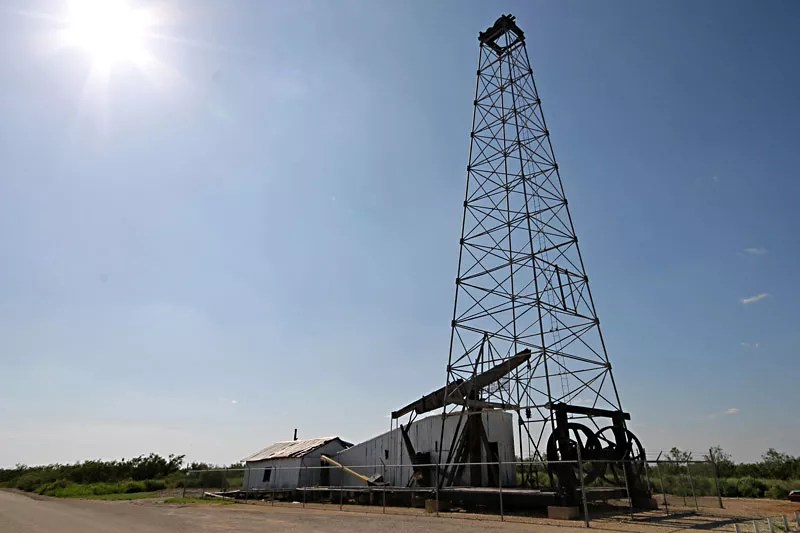
Santa Rita No. 1 turned a page in the history of Texas and the world. An old derrick marks the site of the first major oil well on public land outside of Big Lake.
The 1876 Texas Constitution set aside a million acres of the largely uninhabited West Texas land to endow the Permanent University Fund. By the turn of the century the fund earned around $40,000 per year mostly from grazing leases. After the discovery of oil the royalty payments jumped to more than a million dollars a year. It was the beginning one of the richest public university funds in the world.
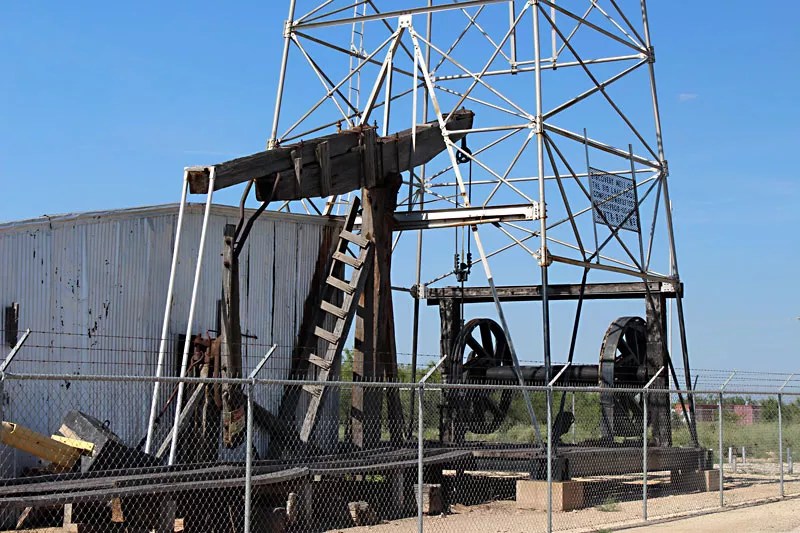
It all began on a dusty plot of desert far from any roads or settlements. Named for the patron saint of the impossible, drilling began a few days before the lease was to expire in 1921.
It took nearly two years of constant pounding for the rig to reach a depth of 3,050 feet. On May 28, 1923, Santa Rita sprayed black crude over the sparse vegetation and one of the richest oil booms in the world began.

In 1940, much of the original Santa Rita rig was moved to the University of Texas at Austin campus at MLK & San Jacinto boulevards (it is currently being restored). The original well, about 13 miles west of Big Lake off U.S. 67, was productive until it was plugged in 1990.
Follow “Day Trips & Beyond,” a weekly travel blog, at austinchronicle.com/daily/travel.
1,287th in a series. Collect them all. Day Trips, Vol. 2, a book of “Day Trips,” is available for $8.95, plus $3.05 for shipping, handling, and tax. Mail to: Day Trips, PO Box 40312, South Austin, TX 78704.
This article appears in March 25 • 2016.