


One of the stars of this year’s ATX Festival is Station Eleven showrunner Patrick Somerville. He and his team took Emily St. John Mandel’s bestselling postapocalyptic novel and somehow made it even better in series form.
The happenstance of its pandemic plotline and multi-storyline plot make for a complex yet eminently satisfying work. Somerville, a novelist and writer for whom this was his first showrunning job, spoke to the Chronicle about his past and future projects, and what makes Station Eleven so special.
Austin Chronicle: Which of the shows you’d worked on before helped you with Station Eleven?
Patrick Somerville: All of them. I started on The Bridge. I worked for 24 after that, and then I went to The Leftovers, and I think I learned things in all of those rooms and experiences that ended up being necessary to make the story go on Station Eleven. I think it’s a literary novel, but it has stakes that are life and death, and it has mysteries in it. And The Bridge was a mystery. 24 is 24. It’s the downhill velocity of that show. It doesn’t take a lot, but you got to sprinkle that in sometimes to make your viewer sit up and say, “Oh!” Station Eleven is a funny mix, a funny combination of storytelling tools, and I think part of the fun of the show is switching around to different kinds of feelings in different episodes.
“We were naive and innocent. We were making a show that wasn’t aware of what we were all about to go through.” – Station Eleven showrunner Patrick Sommerville
PS: In terms of the world building, it had to feel not just like a new world, but like a dusty and dirty, busted new world, a janky world. There’s something about that tone-wise, I think, that helps. The audience accepts the fantasy space. The first Star Wars movies did this, too. Everything was broken. Everything was dirty. I think when that franchise gets away from hyperdrives that don’t work, it starts not feeling the same anymore. Just “made” instead of “happening.”
AC: It’s probably a nice balance between the two, between the sort of form and function. But sometimes I almost think the form matters more. Like The Leftovers, the tone of that thing is so specific and precise that the story’s almost incidental. And I hate to say that because it isn’t, but you know what I mean.
PS: That’s the gift Pete Berg gave to that show at the front end, which was his particular style of handheld movement, of down at eye level subjectivity that just feels authentic. Putting that into The Leftovers story was a pretty imaginative combination. Because we, like Station Eleven were asking an audience to go to wild, fantastical places, imagination-wise. So keeping it at ground level somehow is really important.
AC: Was it a concern that after COVID people might not want to watch a show about a pandemic?
PS: I didn’t spend a lot of time worrying about it, but I felt fine about it because Hiro Murai directed episode one, which is the episode of the show that’s most about our experience. And we shot it before we had ever heard of COVID. And so in a strange way, that meant we were naive and innocent. We were making a show that wasn’t aware of what we were all about to go through. And there’s something safe about it because of that. We also knew it’s a story about warmth and love and connection, and Jeevan taking care of a kid in that first episode, and it’s lighthearted and fun. And we hoped, and I think it’s been true, largely, that even if it is a little bit too soon, it doesn’t mean that we don’t treat the audience very carefully.
AC: To me, it’s the writing. For example, the lines that keep getting repeated from the graphic novel, those turn into a liturgy. “I remember damage. And escape. Then adrift in a strangers galaxy for a long time.” It’s an archetype of not just our last three years, but of life.
PS: Yes, I think when Station Eleven worked, we happened upon things that were big by going to small places. And I think that thing that you’re talking about, that is the graphic novel. That’s the text. That’s the 83 pages of the graphic novel. It’s a poem, really, that we had to write in the end. But the reason it feels, I think, universal, is because it’s true to her specific traumatic experience. And I think all of us are traumatized. Which is a sad truth. We had the idea. What if we hear, basically, the graphic novel from Miranda’s voice throughout episode three, but we don’t know that’s what we’re hearing quite yet?
AC: It’s all of their traumas, but it’s also all of our traumas. Because that’s what you do, is you remember damage. That’s the first thing.
PS: I wrote that largely on March 30, 2020. There’s a little insight for you. That was two weeks into our shelter in place. And I was in the garage with my son at seven o’clock in the morning, watching Hiro’s director’s cut for a second time.

AC: Let’s transition real quick to your next project. The Glass Hotel is a novel, also by Emily St. John Mandel. You said in the panel it’s going to feature Miranda? Talk about these two shows that are sort of connected but sort of not?
PS: Well, it takes place in 2008, 2009, before the flu comes. It has nothing to do with the flu. It’s a mystery, and Miranda is the detective. And it’s about the financial collapse. Wall Street and the end of a Ponzi scheme. So it’s giving us the chance to watch Miranda’s particular artistic and logistics brain at a different time in her life, before she’s finished writing the graphic novel, while she’s starting again to work on it after the disaster with Arthur.
And it’s just a way to get deeper into her, but also with the Ponzi scheme and the end of Lehman Brothers and Bear Stearns in that time, to look at the time that was the seeds of destruction for the world. I mean the flu was coming. No one was going to survive it, but like Tyler says in Station Eleven, “We built it wrong.” We built a world that was going to collapse, and I think now, as we’re still years into the pandemic, and failed to do right by the citizens of the US, at least, in preparing us or dealing with it, we’re somehow spiking again, and a million people have died. I think it’s worth asking questions about what systems are in place to protect us and why are they there?
AC: With the graphic novel in Station Eleven you created that physical object in another universe that people are longing for. But is it crazy to have created this fictional object of desire? There is no graphic novel I can go to Barnes and Noble and buy.
PS: Not yet. Well, we wrote the whole thing, and if The Glass Hotel goes forward, I think that we’ll probably make it. We only got through 22 pages in production of Station Eleven, and it’s actually 83, but if we make The Glass Hotel, we’re going to make the whole graphic novel. And we’re going to make it available to fans of the show.
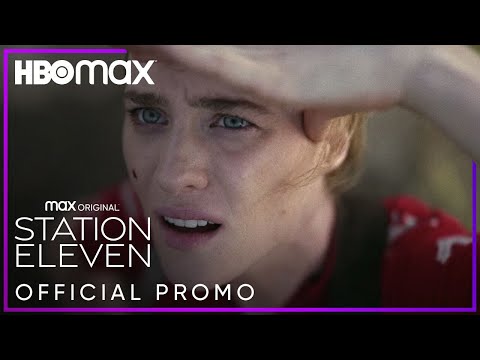
Station Eleven is on HBO Max now.
ATX TV Festival, June 2-5. Tickets and info at atxfestival.com.
This article appears in June 3 • 2022.