


Woe to the unsuspecting audience member who confuses the subject of R.H. Greene‘s devastating documentary with her later, lesser cathode-ray, horror-hostess knockoff Elvira. Vampira was the first, the best, and, sadly, one of the most tragic of all of early television’s myriad personalities.
It was model/actress Maila Nurmi who first pioneered the witchy personality to perfection, live on KABC-TV in Los Angeles in 1954. The Vampira Show only ran for a single year, but Nurmi’s wise-cracking, wasp-waisted creation — inspired by Charles Addams‘s New Yorker cartoons — has, over time, become iconic in a way not dissimilar to that of Bettie Page. The difference, as Greene’s lovingly crafted doc notes, is that Page took the “all-American girl next door” into the dungeon, whereas Nurmi (herself a West Coast cheesecake model prior to everything else) brought the dungeon into the American living room, via that crazy new household appliance, the television. And she was nominated for an Emmy.
Vampira and Me works on multiple levels: as a Hollywood history lesson, as a portrait of mid-fifties Americana, and as a long-overdue tribute to the endlessly fascinating Nurmi, whom Greene befriended during the autumn of her years.
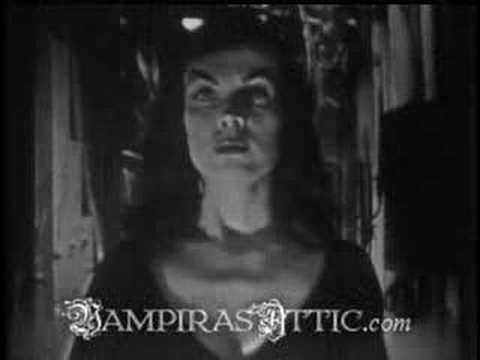
Because The Vampira Show was regional television produced well before the advent of video, only two minutes of actual kinescoped footage of Nurmi’s program existed, until Greene uncovered another precious few minute during his researches on this film. Thus we get to see Vampira on The George Gobel Show and lounging around the KABC set, regally aloof and adrift on clouds of dry ice fog. More heartbreaking are the ongoing clips from interviews with the octogenarian that Greene weaves throughout the film.
Still vivacious and with a giddy laugh despite the ultimately tragic arc of her life, Nurmi recounts her deep and abiding friendship with James Dean, her relevance to the 1950s teenage rebellion that would later spawn the Beats and, even later, punk, goth, and rockabilly/psychobilly fashion and music, and her post-Vampira Show exile during which time she was, for the most part, destitute.
Greene’s doc presents Nurmi as a witty, erudite, and bewitching woman who was swallowed by her own creation and then spat out almost immediately by the very industry that spawned her. Instead of dwelling on the Vampira character’s brief scenes in Ed Wood‘s godawful Plan 9 from Outer Space, we’re given clips from a far more accurate — and non-Vampira — depiction of Nurmi the actress/poetess in 1959’s The Beat Generation.
Like Louise Brooks before her, Nurmi was ahead of her time, a harbinger of a new pop culture soon to be dominated by Dean, Marlon Brando, and Elvis Presley. It’s a testament to the lasting impact her foreshortened career had on us that not a Halloween goes by that somewhere, sometimes everywhere, Vampira is all over the place.
Vampira and Me screens again Monday, Oct. 22, 10pm at the Alamo Drafthouse Cinema at the Ritz.
This article appears in October 19 • 2012.