

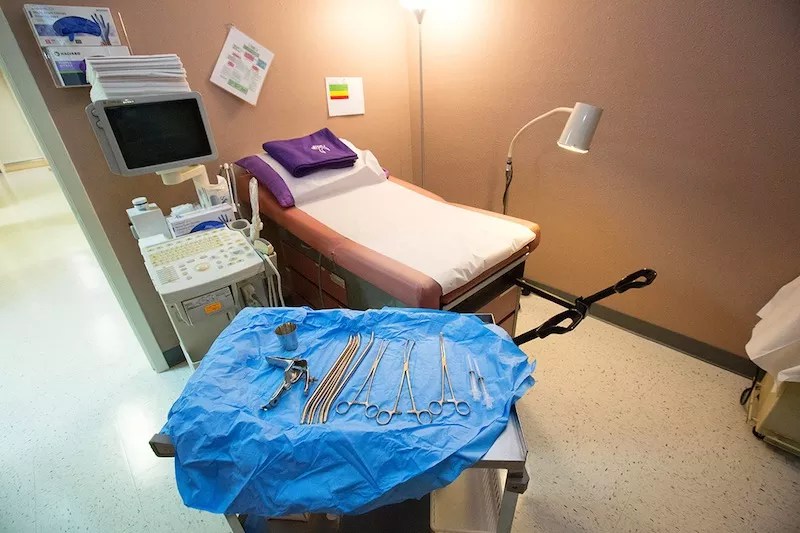
After the 2016 rejection of parts of anti-abortion House Bill 2 at the U.S. Supreme Court, it’s understandable to expect that the more than two dozen abortion clinics that shuttered as a result of the draconian law have popped back up. But in reality, only a small number have been able to reopen. And a recent study confirms just how dire the landscape in Texas really is. The University of California-San Francisco’s Advancing New Standards in Reproductive Health research group examined U.S. “abortion deserts” this month – cities where women must trek more than 100 miles to get care – and found 27 existing in the whole country. But they found 10 such cities in Texas, making this state worst of all. In fact, it’s home to four of the top five cities (Lubbock, Midland, Odessa, and Amarillo) where women must travel the farthest, upward of 300 miles. And thanks to state-mandated barriers, like the 24-hour pre-abortion sonogram rule and last legislative session’s cruel ban on abortion insurance coverage, Texas women traveling hundreds of miles for access face a slew of other obstacles. In the abortion desert that is Texas, it’s no wonder women are starting to feel like their constitutional right is just a mirage.
This article appears in May 25 • 2018.