


As predicted, Austin is entering Stage 2 of its Drought Contingency Plan this weekend.
According to a press release from Austin Water Friday morning, combined storage in Lakes Travis and Buchanan – the Highland Lakes that supply Austin’s water – is projected to drop below 900,000 feet within the next few days. The lakes are losing 20,000 acre-feet a week, putting the water source of 1.4 million homes, businesses, and wildlife at risk – they’ll fall below 45% capacity this weekend.
Central Texas continues to be in extreme and exceptional drought conditions, the worst in the state, according to the U.S. Drought Monitor. The Lower Colorado River Authority has already cut off water to the Gulf Coast and agricultural customers in Colorado, Wharton, and Matagorda counties for the first time since the 2012-15 drought, and for the first time in its 36-year history, the Barton Springs/Edwards Aquifer Conservation District announced it’s on track to enter Stage 4 Exceptional Drought status. Jacob’s Well has reported zero flow since late June, and the city of Georgetown is struggling to meet its drinking water demands as 75% of its water goes toward irrigating outdoor lawns.
New watering restrictions will be implemented August 15:
• Large ornamental fountains can no longer be operated.
• New landscape-establishment irrigation is no longer exempt from the watering schedule.
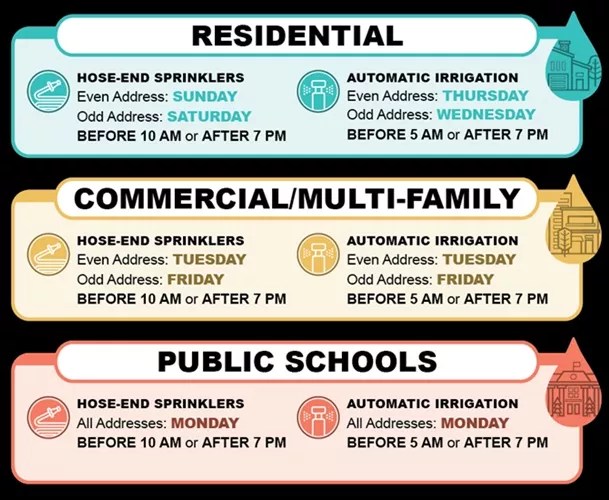
• Automatic irrigation and hose-end watering is restricted to one day per week.
• Automatic irrigation runtime is reduced by three hours with cutoff at 5am instead of 8am.
• Water waste is prohibited.
• Restaurants may serve water only upon request.
• Charity car washes are prohibited, and home car washing must use an auto-shut-off valve or a bucket.
• Patio misters at commercial properties, including restaurants and bars, may operate only between 4pm and midnight.
Irrigation rules are different for residential, commercial/multifamily properties, and schools. See the diagram for timings for each. The penalty for noncompliance – which can be reported via 311 – is up to $1,000 per violation.
The BSEACD website reads: “The only way for the aquifer to recharge and end these drought conditions is a long period of significant rainfall. Until this occurs, community members in and outside of the District can do their part by actively conserving water resources.” In the city release, Austin Water Director Shay Ralls Roalson notes, “We’re all in this together, and there is no substitute for water.”
This article appears in August 11 • 2023.