Certain Texas Tribune Festival panels have the feel of a group therapy session. We, the Texans who consume news, are collectively terrified and appalled, and we’re coping in one of the only ways we know how: with lanyards around our necks.
Famous politicos sometimes play the therapist role well. Stacey Abrams was one of them Saturday, but even her star power and palpable hope were not enough to outshine all the Texas trauma in that Austin room.
The first group-wince came within five minutes of the panel on voter suppression (optimistically titled “Unsuppressed”). NPR’s Ashley Lopez, moderating the conversation with Abrams and national voting rights correspondent Ari Berman, had only to utter Attorney General Ken Paxton’s name for the crowd to recoil in tandem.
It’s no wonder the audience was a little raw. Just in the last few weeks, the Tribune has covered the state’s recent voter roll purge, raids of Texas Latinos’ homes over alleged election fraud, and the Paxton office’s conspiracy-theory-fueled investigation of voter registration organizations.
Like many good therapy sessions, the conversation began with some affirming statements about just how bad shit really is. Consider that there are close to 4 million voting-age Texans who aren’t registered to vote. That means more than 20 U.S. states have a smaller total population than our population of unregistered potential voters. Meanwhile, the state has implemented rules that make it harder to vote, particularly for people of color.
“Texas is one day going to look like Travis County, Bexar County, Harris County, and one of the goals of the Texas Republican Party has been to prevent those demographic changes from having political changes,” Berman said. “So you have a white Republican leadership that is dramatically out of step with the demographics of the state, and they’re trying to do everything they can to [prevent] those new demographic groups from having political power.”
Abrams, like a good therapist, pointed out that we may feel like we’re the only ones dealing with this thing, but in truth, lots of states are fighting similar battles. “We cannot isolate Ken Paxton from Brian Kemp. From the state of Florida,” she said. “What is happening in South Dakota is part of this. This is not endemic to a certain person. It is the intention of a party.”
“It’s going to take longer in Texas, I think, than in other states, but there is a model for states that were seemingly rigged that have become unrigged.” – National voting rights correspondent Ari Berman
The pair discussed many of the ways conservative politicians have worked to suppress minority groups’ access to the polls, but then pivoted to a more hopeful note: the federal Freedom to Vote Act, which would set baseline national standards to protect voting rights, and which nearly passed Congress in 2022. It could still become law, and Berman pointed out that some of the reforms it includes around gerrymandering could be implemented at the state level, too. “We’ve seen states like Michigan and Wisconsin, that were extremely gerrymandered, change gerrymandering,” he said. “It’s going to take longer in Texas, I think, than in other states, but there is a model for states that were seemingly rigged that have become unrigged.”
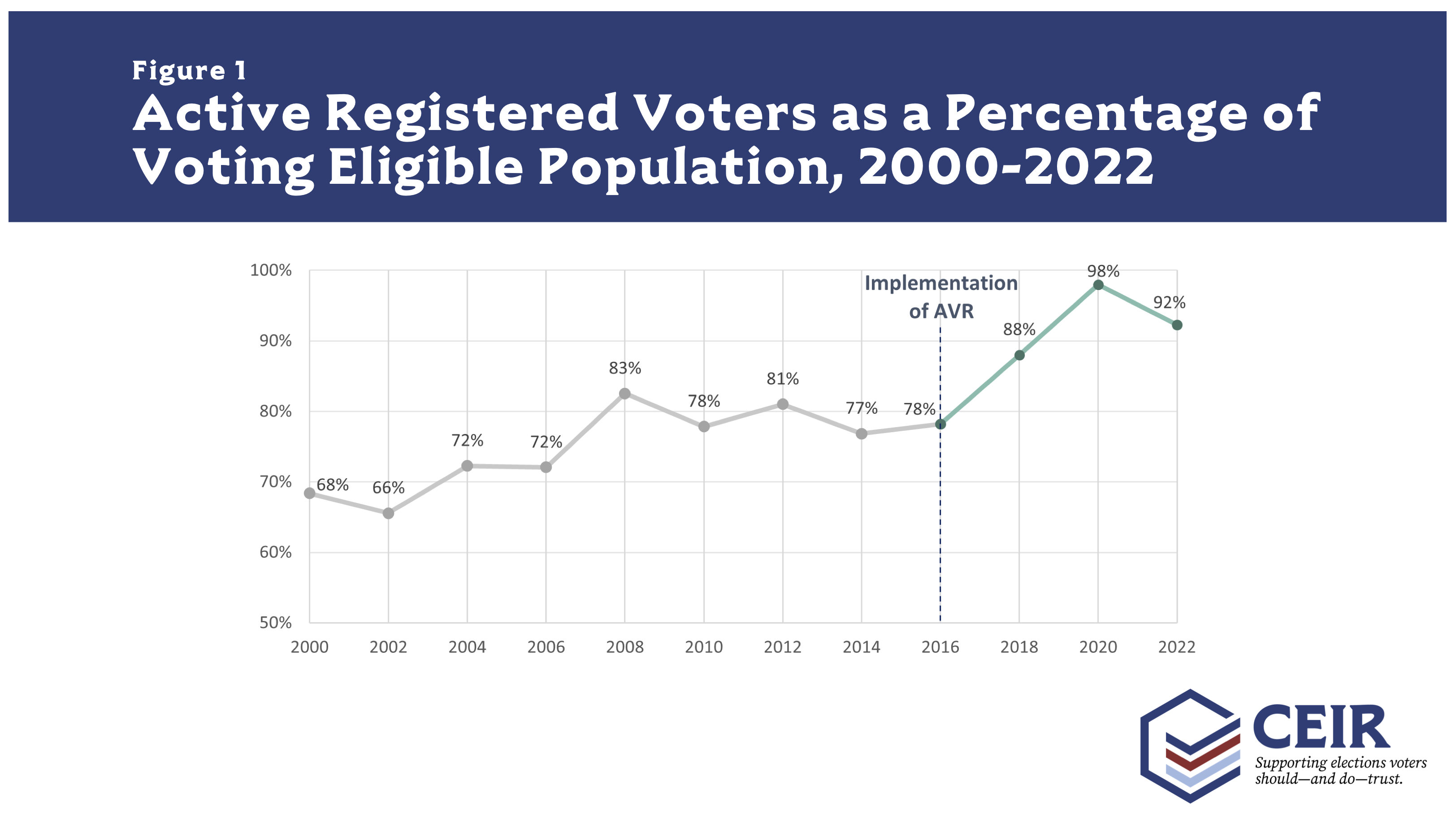
Abrams highlighted progress in her state, Georgia, which implemented automatic voter registration (AVR) in 2016. “We had 800,000 unregistered people of color in Georgia when we started doing voter registration work in 2012, 2014. That number is now minuscule. About 90% of eligible voters are registered in Georgia.”
It was a question from an Austin Community College student that finally broke the conversation away from the practical barriers placed between voters and ballots. It turned the panel’s attention to a much slippier issue: belief in democracy. “I notice a lot of cynicism from young people like me. And I worry about young people turning out.”
Therapist Abrams acknowledged that cynicism around voting (what your psychologist might call avoidance) comes from the feeling that your government hasn’t responded to you in the past (what your psychologist might call rejection).
“Telling people someone died for their right to vote does not work. It is not a persuasive argument. Telling people that it’s your responsibility does not persuade people. What is persuasive is connecting the dots between the act of voting and the outcome you want,” Abrams said. Student debt cancellation and cannabis legalization, she pointed out, are outcomes young people want that only certain electeds will fight for. “Voting is medicine. It is not magic. Magic is you vote, you get what you want. It doesn’t work that way. Voting is medicine, and if we don’t take our medicine we get sicker.”
This article appears in September 13 • 2024.