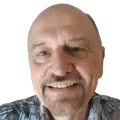
“It’s an article of faith for Democrats that the sales tax is regressive. The gas tax is much, much more regressive. The gas tax is, literally, a transfer of wealth from the poor to the middle class – to the upper-middle class.”
That’s not some blogging transit activist or Green Partier speaking on the inequitable burdens of highway costs. It’s District 52 state Rep. Mike Krusee, who’s currently best known – for better and worse – as the legislative face of Texas toll roads. We spoke at length last week in his Capitol office, a few days after he announced that he has decided not to run for another term (the current term ends in January 2009). “I will be leaving elective office,” his Nov. 27 statement read, “but I intend to stay active in the issues I care about, Transportation and New Urbanism, both here in Texas and nationwide.” Krusee dismissed speculation that his unspoken reason is that the next race might be too tough. “It’s a fact that that district is changing, but that didn’t really have any impact on my decision,” he said. “I’ve always believed that if I wanted to run a hard race, I’d win. Or at least, if I thought that the best remaining way for me to have an impact was to continue serving in the Legislature, I would run hard, whether I thought I could win or not.”
Krusee now believes that he can have a greater impact on transportation and land-use issues elsewhere than elected office. He’s serving on the National Surface Transportation Infrastructure Financing Commission – that basically means, he says, “we’re trying to figure out how we’re going to finance surface transportation across the United States for the next 50 years.” And he’s on the board of the Congress for the New Urbanism, a nationwide organization actively promoting the planning of “walkable” urban neighborhoods as the antidote to decades of metropolitan sprawl. “That’s probably my greatest thrill in public life now, is serving on that board,” Krusee said. “It’s more meaningful to me than my seat in the Legislature, because of the impact that it has nationwide, and even worldwide, on people’s lives.”
Fighting Communism
Krusee freely admits that he’s come to New Urbanism only recently, since 2003, when he assumed the chairmanship of the House Transportation Committee. His friend and town planner Scott Polikov was telling him he needed to start thinking of transportation not just literally but in terms of land use and Smart Growth. Krusee was skeptical. “We all look at things through our own lenses,” he said, and through his “Republican lens,” he saw Smart Growth as “just a bunch of ‘communists.’ I’m being facetious. But to me, that was people who want to control the marketplace and how people want to develop. And my perspective was that the free market should take care of all that, and people should develop their own land with their own money, as they see fit.”
Polikov persuaded Krusee to attend a seminar on New Urbanism, taught by the planning movement’s guru, Andrés Duany, at his Kentlands development in Maryland. “I spent those days listening to Duany explain what New Urbanism was and what sprawl really was, in terms of design and its impact. I came away from that a convert, in just five days.”
What forcibly came home to Krusee is that highway planning is not simply building more roads but is too often a form of subsidizing wasteful and unproductive development, which he agreed is “welfare for the suburbs.” “They are! They are, absolutely! … The way our growth model works in Texas, and generally around the country: Developers seek cheap land, on the periphery; they develop it in a manner that’s accurately called sprawl and in a manner that generates thousands of [vehicle] trips.” Yet the gas-tax money paying for those freeways, he points out, comes disproportionately from inner-city drivers, driving primarily on city streets that don’t get the benefit of those same state taxes – thereby subsidizing not just sprawl but the congestion, pollution, and the associated social costs. “We’re not making polluters pay – in fact, we’re subsidizing driving in the suburbs, taking long trips, driving cars with low gas mileage. We’re making that easier to do; we’re subsidizing all those habits.” He argues that the new toll roads (public or private) are not only necessitated by the lack of other sustainable financing but are beginning to redress fairly that historic urban/suburban imbalance.
Finding Solutions
Krusee is convinced the political balance on these issues is shifting along with the financial realities and that the economics of oil (and exploding construction costs) will force steady change. He’s become a forceful local mass-transit advocate and believes the political will is now available to win big votes on mass transit. “I’ve actually been pushing Lee [Walker] and Cap Metro to be much more ambitious. … We’ve got to have a Downtown circulator; we’ve got to go to Elgin and Manor; we’ve got to go to the airport; we’ve got to go to Mueller.”
On that issue, too, Krusee’s a relatively recent convert. There are those who say his successful advocacy of suburban commuter rail instead of the light-rail lines initially proposed clumsily destroyed the possibility of effective Downtown mass transit for another decade – and that instead, we’ll be trying to retrofit a system conceived for the very suburban sprawl it’s supposed to replace. But as Mike Clark-Madison wrote here, about a year after Krusee was having his New Urbanism epiphany, “It’s also pretty obvious that the only way Austin will ever have rail transit is if we start with a commuter system serving western suburbanites” (“Austin @ Large,” April 9, 2004). Krusee believes that even the suburbs are realizing that there’s more to life than commuting, and that regional, bipartisan cooperation can respond. We need “to encourage good planning throughout our region,” he believes, “so that everyone has an opportunity [for sustainable communities] and also to provide mass transit.”
That’s not quite communism, of course. But it sounds like something we all can come together and pray over.
For more from my conversation with Rep. Krusee, see the sidebar below. If you feel a need to confess your own conversions – or just have news tips – e-mail mking@austinchronicle.com.
This article appears in December 7 • 2007.