

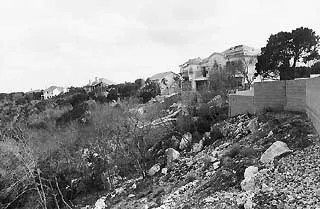
Though the transformation of Austin into a jam-packed, regional city continues, there are still wide-open spaces to be found. Even as the breathless pace of development continues to change the face of the city, tens of thousands of acres in and around Austin are being held out of the land rush for a variety of purposes: water quality protection, endangered species protection, and plain old public recreation. What, exactly, is happening on those tracts, and who’s doing what out there? It’s a sticky question, especially as more and more land is preserved from development. As the long-term policies governing the management of said land are being laid out, the tension between public access and ecological preservation is heating up. The hottest of those spots, at least to date, are in the Balcones Canyonlands Preserve (BCP) system. A massive project designed to protect a variety of endangered species, the Balcones Canyonlands Conservation Program (BCCP) is a joint effort of the city of Austin, Travis County, the Lower Colorado River Authority (LCRA), the Nature Conservancy of Texas and the Texas Audubon Society, as well as some private developers who own land in the area.
The idea, hashed out over several years, was that by preserving a large block of habitat for endangered species — 30,000 acres’ worth in western Travis County — the city and county would satisfy the requirements of the federal Endangered Species Act, thus paving the way (pun intended) for development in other areas where endangered species live.
For example, according to the 1996 management agreement for parts of the BCP managed by the LCRA, one aspect of the plan is “to provide a mechanism whereby the LCRA and its wholesale electric customers may proceed with public capital improvement or other construction projects in compliance with the Endangered Species Act.” Toward that end, LCRA earmarked 2,565 acres of its own land as preserve system land, and committed to manage it for the preservation of endangered species therein, namely the golden-cheeked warbler and the black-capped vireo.
BCCP partners have been ponying up healthy amounts of cash for the project: In 1993, Austin voters approved about $22 million in bonds (the city has also received money for BCP land through mitigation fees paid by developers doing projects in endangered species habitat land). Travis County voters rejected a $49 million bond issue in 1994, and the county was subsequently unable to purchase as much of the land as it had originally planned to buy.
Because only about two-thirds of BCP lands were actually purchased, the U.S. Fish and Wildlife Service has required more stringent management of the preserve — the less habitat there is, the higher the quality it must be to preserve the species. But sources say the county is planning to purchase its fair share of BCP land, and that the money is starting to come in to do just that.
Disputes over public access to BCP lands raged last year when the BCCP’s coordinating committee was submitting its five-year management plan to U.S. Fish and Wildlife. From horseback riders to mountain bikers, citizens with heretofore permitted recreational interests in the land were dismayed to see their access limited for the sake of the birds and karst invertebrates that the preserve aims to protect.
The Real McGregor
And in other little-known pockets surrounding Austin, the future of BCP management practices is being hashed out. Take, for example, the case of the LCRA-managed McGregor Tract, situated on the north shore of Lake Travis, northwest of the “Four Corners” intersection of FM 620 and RM 2222, and near the infamously “clothing optional” Hippie Hollow Park. The whole of the McGregor Resource Area is 542 acres, but only about 362 acres are included in the preserve. Questions about how the McGregor preserve should be managed cropped up last year when a resident alerted the LCRA of the need for a fence separating the preserve from private property, due to the dubious activities of a developer who, as part of his plan to build six condominium units (which were later forbidden by the city of Austin), planned to seize an easement across the McGregor tract to a Lake Travis cove south of the tract. LCRA agreed that a fence should be built, noting that the fabled glut of white-tailed deer along Lake Travis was posing an imminent threat to warbler and other BCP habitat. Similarly, the city of Austin has erected fences to control deer on BCP land in its jurisdiction.
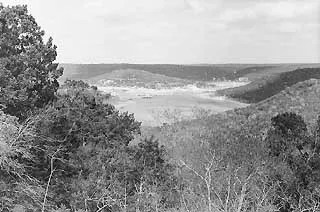
On Jan. 12, LCRA sent a letter alerting residents of the need for a fence, resulting in an outcry from neighbors who have long enjoyed use of the land. Although the BCCP’s 1999 management plan lists as a primary goal the limitation of “human disturbance” of golden-cheeked warblers and black-capped vireos, neighbors say they did not know the land was off-limits for private groups. Noting that, according to the management plan, the BCCP’s secondary goal is to “offer a limited number of guided tours and other educational opportunities,” the LCRA came up with the idea for a “voluntary conservation program” — a sketchily defined scheme which would, according to the February newsletter of the Comanche Trail Community Association (the folks who live in the relatively swishy subdivision above McGregor) “provide permits to individuals who wish to assist the LCRA in managing the preserve.”
But managers of the land have countered that the law’s the law; and when it comes to BCP land, they say, the needs of the endangered species come first. If the BCCP is found to be failing at its stated goal of preserving the species, the federal government has persuasive remedies at its disposal — among them, forbidding additional development in the area that could have been built out under the provisions of the BCCP (though that’s not terribly likely: An old story goes that you’d have to kill a golden-cheeked warbler on the steps of the Department of the Interior to get a remedy.)
“We love that land. A bunch of our neighbors are birders [who] love to walk out there and bird watch and stuff like that,” says Comanche Trail resident Jennifer Evans. No sooner had the issue arisen, Evans says, than the neighbors and LCRA reached an agreement that the fences would not be installed and that neighborhood residents could help the agency patrol the property. “Everything was emotional because we cared so much. When everyone came together, we realized, this is the perfect thing,” Evans says. “They ended up being really receptive.” Neighbors will receive training, and become “the equivalent of museum docents” according to Evans.
Sherri Kuhl, environmental program leader for LCRA’s Community Services division, says the volunteer conservationists would assist the LCRA with “certain activities like looking around for cuts in the fence, trash, mountain biking, and off-road vehicles.” She notes that the city of Austin operates similar programs, as do a variety of other conservation-minded organizations.
But others have countered that the law’s the law, and when it comes to BCP land, the needs of the endangered species have to come first. If the BCCP is found to be failing at its stated goal of preserving the species, the federal government has persuasive remedies at its disposal — among them, forbidding additional development in the area that could have been built out under the provisions of the BCCP (though that’s not terribly likely: An old story goes that you’d have to kill a Golden Cheeked Warbler on the steps of the Department of the Interior to get a remedy.)
At least one area critic, who wishes to remain anonymous, says the LCRA kowtowed to the demands of a wealthy and vocal neighborhood faction that wants to keep using the preserve as its own private playground. Even if they did open up access to the “voluntary conservation program” to other members of the public, would interested parties really have the chance to get involved? Though Evans says she understood the conservancy program to be “just for the community” at Comanche Trail, LCRA’s Kuhl says her agency “would certainly work with other groups” with an interest in the McGregor tract, though their participation might take a different form than that of the Comanche Trail neighbors. Evans says she and the LCRA have a common interest in the McGregor tract: “We want to keep the public out of it, too, and protect the birds that nest there.”
Just Another Amenity?
There is a case to be made that those who live near a given piece of land would be the ones most invested in protecting it, and therefore the best candidates for volunteer conservation programs. On the other hand, with a less-concerned resident population, endangered species habitat could become nothing more than another amenity offered by developers of an upscale subdivision, leaving the endangered species the tract was acquired to protect to fend for themselves.
Such a turn of events would be doubly damaging in light of the fact that the “management” of conservation lands gives the managers the right to develop on other areas of habitat. As part of the agreement that established the BCP, each partner got a bank of development credits, according to how much habitat land was preserved elsewhere. The more habitat each partner preserves, the more credits it may draw, and sources say that LCRA is drawing heavily from its bank of BCP credits in order to build in other endangered species habitat areas. But if the credits are given for habitat land that is not being adequately managed, the species gets a double blow: degraded habitat in one area, and damaged or destroyed habitat where development occurs in another.

Dean Keddy-Hector, a biologist who works with endangered species on several BCP tracts, says it sounds as if in the case of the McGregor tract, the LCRA may have been “blackmailed into providing access by neighbors who may not have been too conscientious about how they use sites.” On the other hand, he says that with the large amount of land LCRA has to patrol, perhaps “deputizing” local populations is “the best they can do.” In fact, he says, it’s possible that isolated BCP tracts such as McGregor are better off with “some minimized access than to have them completely closed off,” because when land is deserted, “more destructive access” from those more or less unconcerned with preserving endangered species can occur.
Through his work in habitats including Austin’s National Wildlife Refuge, Keddy-Hector has seen his fair share of destructive behavior by neighboring residents. He says that avid golfers living nearby like to tee off on the cliffs above the refuge. At best, they’re littering. “Some of their impact zones coincide with warbler territories. It’s an odd way to treat some really pretty land,” he says.
The issue of access is rumored to be bubbling up in other residential areas as well. In Steiner Ranch, a residential subdivision in northwest Travis County, for example, developers are also participating in the BCCP habitat program, by setting aside preserve land in exchange for development rights elsewhere in the habitat. Rumor has it that the developer of Steiner Ranch wants to set aside about 1,000 of the subdivision’s 5,000 acres for conservation purposes, leaving much of that land open for nature trails — but only to residents of Steiner Ranch.
Critics of such practices (a pesky, off-the-record bunch all) charge that residents view the habitats as amenities, like tennis courts or swimming pools, instead of preserves dedicated to the perpetuation of endangered species. They postulate that if there is to be limited public access, people who can’t afford to live there may actually be better stewards of the land. LCRA’s Kuhl says that’s not the case. “The concept wasn’t if you can afford to live there, you can assist. It was, you live out there, you (are in a position to) assist us. We’re trying to do the right thing.”
It has yet to be seen whether a similar battle will be waged over what types of access the city will allow on its Proposition 2 land in Southwest Austin. There’s no doubt that the Proposition 2 land was advertised, at least to some extent, as a place for public recreation, but the primary reason for the purchase was to preserve the land from development in order to maintain water quality in the city. A joint study that is currently underway, led by the Wildflower Research Center of Texas, will determine how much public use of the land our water quality can stand, and what kinds of activities the city will allow.
Private consultant Ted Siff, who’s managing the public input part of the land management plan, says there’s “one golden rule” the plan will follow: “Whatever public use might be approved on the Prop. 2 lands … would have to be compatible with the primary objective of water quality protection.” Siff says the management plan will probably be broken down into the four watersheds where land has been purchased: Bull Creek, Bear Creek, Barton Creek and Slaughter Creek. According to Siff, civilian volunteers will likely have a role in managing Proposition 2 lands.
So far, Siff says, one thing that has stood out during the public input process is that “the vast majority of respondents have also volunteered to help in the management, the stewardship, [and] doing things like giving tours. I’m really thrilled with that response.” Following the survey period, there will be a series of public meetings on the land management plan. The first will be held March 25 on the land known as the Stennis tract, at the northwest corner of Spicewood Springs and Loop 360.
A mini-scuffle is in the works over whether to allow soccer fields on the land. Central city environmentalists have scoffed at requests by Circle C and Oak Hill residents who want Prop. 2 lands to become soccer fields. But, according to Siff, residents across the city have demanded soccer fields, as have some area soccer leagues. “At this point, nothing is off the table,” says Siff, who notes that soccer fields would probably not be permitted in recharge zones; but, he adds, if sufficiently non-environmentally sensitive lands were discovered within the universe of Proposition 2, soccer might commence there. 
This article appears in March 3 • 2000.