




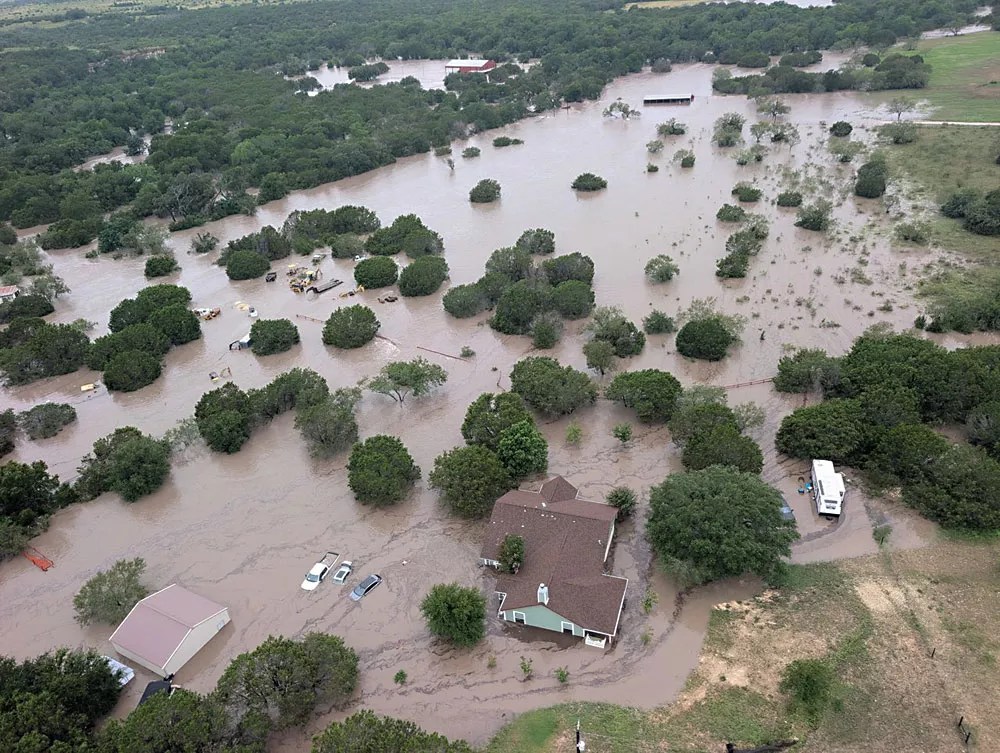
Across Central Texas, residents are still grappling with the damage done by the Fourth of July floods to their property, family, and livelihood. The final death toll is estimated to be between 138 and 141 people, the deadliest flash flood event in almost 50 years. In total, damages range between $18 billion and $22 billion.
This incident is not isolated, but the product of an increasingly unstable global climate. The National Oceanic and Atmospheric Administration reported that Texas experienced 68 weather and climate disasters, each with losses exceeding $1 billion, in the last five years. Of those, 20 were in 2024 alone. Between 1980 and 2010, the state never experienced more than six such incidents per year.
As disasters increase, the price tag on property is skyrocketing for Texans. According to the Texas Department of Insurance, homeowners saw an average insurance rate increase of 18.7% statewide in 2024. In 2020, the average annual premium for a homeowner was $1,987 statewide, says TDI spokeswoman Mistie Hinote. In Travis County, the average annual premium is $2,989.*
Simultaneously, some insurance providers are dropping coverage in risk-prone areas. This reduces market competition, which can drive up rates. Four companies stopped writing policies in Texas entirely last year, says Texas Insurance Commissioner Cassie Brown. Progressive experienced $1.2 billion in catastrophic losses in 2024’s second quarter, 40% of which were attributed to Texas. As a result, they reduced coverage across the state. Lemonade Insurance acknowledged it “may be too risky” to “insure a lot of homes that could all potentially get damaged by the same event at the same time.”
“The nation is severely underinsured when it comes to floods. If their mortgage company doesn’t require it, they’re not going to buy it.” – Rich Johnson, Insurance Council of Texas
While inflation plays a role, these alterations are largely attributable to climate change. The Brookings Institution cites an overall increase in frequency and scale of natural disasters, coupled with better risk projection models from insurers, as major culprits behind record-high premiums and insurers dropping coverage. Because mortgage lenders require homeowners insurance, the growing costs are unavoidable.
Not included in fluctuating costs, however, is flood protection. Flooding is unpredictable and “can happen anywhere,” explains Rich Johnson from the Insurance Council of Texas. “It got to be so expensive back in the 50s and 60s … insurance companies couldn’t charge enough money to cover the losses.”
Some private companies offer flood insurance for an additional charge, but homeowners typically go through the National Flood Insurance Program (NFIP), administered by FEMA. Policies cover homes up to $250,000, but Johnson says “there’s a 30-day waiting period,” making it not possible to receive last-minute coverage when disaster approaches.
The impact of the Fourth of July floods on rates is not discernible due to recency of the events. But because the cost of insurance is already high, many Texas residents are hesitant to cough up additional funds for flood protection. Of the homes affected by the Fourth of July floods, Johnson says only 1-2% had flood insurance, revealing a major gap between all those who are affected by extreme weather events and the few who are financially protected in the aftermath.
Both FEMA and the TDI urge all to get coverage. (The NFIP offers a rate estimate tool here: floodsmart.gov/policy-quote.) “The nation is severely underinsured when it comes to floods,” Johnson notes. “If their mortgage company doesn’t require it, they’re not going to buy it.”
The damage in Kerrville and surrounding areas is evidence enough that disaster can strike without warning. The TDI notes that up to “65% of disaster assistance claims for flood damage have come from people living outside areas designated as hazard[ous].” While the standard deductible for flood insurance is $1,250, just 1 inch of water in the home can cause $25,000 in damages.
At the state level, the effort to protect residents from disaster continues. During the Texas Legislature’s recent special session, the Senate passed a camp safety bill addressing evacuation procedures and emergency preparation. Texas lawmakers also attempted to regulate insurance rates, a task left up to states. For instance, Senate Bill 1643 would have required any rate increase above 10% to receive approval from the insurance department, but the bill was left pending in committee during the year’s regular session.
To lower costs and find affordable rates, the TDI recommends asking around for discounts, improving home safety, and raising personal credit. Johnson points to a resounding issue dominating climbing rates. “We keep building in risk-prone areas and then rebuilding the same way after a disaster,” he notes. “How can we build and repair smarter to reduce the costs and reduce risk?”
Editor’s note: This story has been updated since publication to clarify the average annual premium, not rate, for a Travis County homeowner.
This article appears in The 35th Annual Austin Chronicle Hot Sauce Festival.