

City leaders are hoping a new set of rules approved by City Council last week will alleviate complaints over short-term rentals, a problem they’ve tried to address for over a decade.
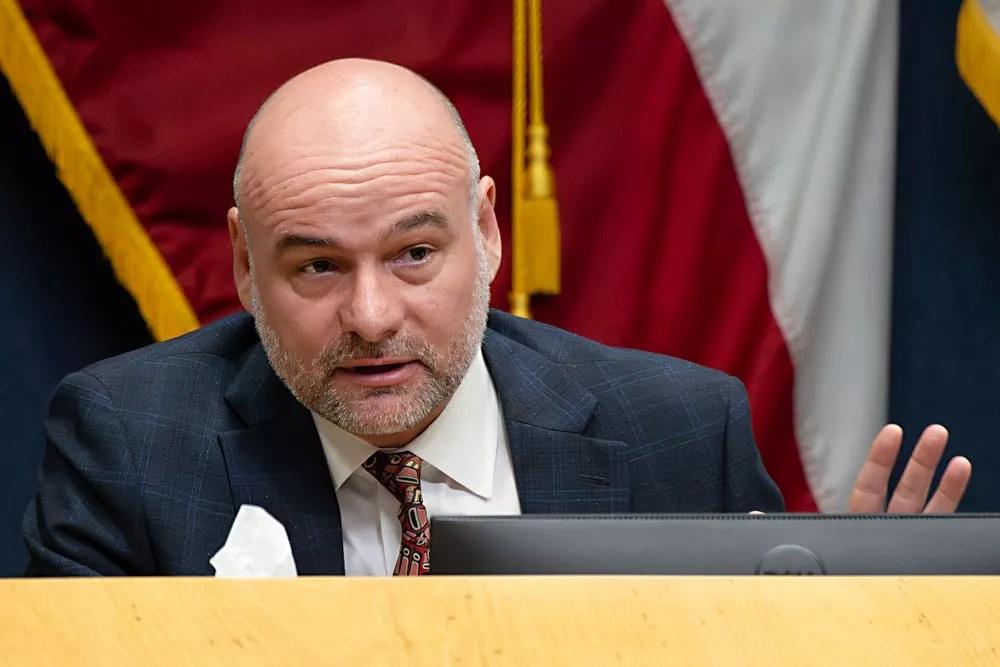
“This has been a thorny and difficult issue and has been through many different lawsuits and permutations,” Council Member Chito Vela said as Council passed the new rules on Sept. 11. “And I feel like we are finally getting to a point where we have a workable and enforceable STR ordinance that will be able to stand up to legal challenges and generate the hotel occupancy tax that we have been trying to get into the city coffers.”
The new ordinance is designed to compel the thousands of unlicensed STRs currently operating in Austin to begin complying with city law and paying their fair share of taxes. The ordinance requires sites like Airbnb and Vrbo, at the city’s request, to remove listings that have not received licenses to operate. It also requires the sites to include the city license numbers for the STRs they list, in an effort to encourage renters to choose those properties.
Unlicensed STRs appear to greatly outnumber those which are licensed in the city. According to AirDNA, which tracks listings by Airbnb and other sites, there are about 15,000 short-term rentals in Austin. But city data shows only 2,400 licensed STRs. That’s a problem, not just because of the lost hotel tax income, but because residents complain more frequently about unlicensed STRs in their neighborhoods than those with licenses.
“I feel like we are finally getting to a point where we have a workable and enforceable STR ordinance that will be able to stand up to legal challenges and generate the hotel occupancy tax that we have been trying to get into the city coffers.” – Council Member Chito Vela
Vicky Garment told us she lived next door to an unlicensed STR for two and a half years in East Austin, on a working-class street where most of the residents spoke Spanish as their first language. She said the STR was owned by a company which marketed it as a getaway for large groups. The company owned other STRs marketed the same way, Garment learned, including some in New Orleans which residents had complained about for years.
“Dealing with them was one of the most horrible, stressful experiences of my life,” she said. “There was property damage, attempts at physical assault, endless verbal assault – and that’s not even including the endless noise, trash, and just utter contempt guests had for neighbors and the community. It was exhausting and demoralizing due to there being virtually nothing that could be done.”
Daniel Word, who oversees short-term rentals at the city’s Development Services Department, said the city will have much more power to handle unlicensed STRs when the ordinance goes into effect next summer. “Once we get to July 1, and we start sending those delist notices, it’s going to make it much more difficult for an unlicensed operator to participate in the market, because they’re not gonna be able to advertise themselves online very easily,” Word said. “They’re gonna have to rely on something like a Craigslist ad, and that’s gonna be a whole lot more difficult to game.”
Word said the city will have more power with licensed STRs, too. “If you have a license, I have your contact information, so I can get ahold of the operator much more readily. If you run afoul of the nuisance requirements too often, that could be grounds for me to suspend your license. Then that could be grounds for me to have your advertisement taken down. So I feel like we have a lot more teeth in terms of enforcement going forward.”
The new ordinance also tweaks eligibility and licensing requirements for STRs and tightens up enforcement deadlines. It changes the number of STRs that can exist on a given street by specifying that there be 1,000 feet between each short-term rental unit’s lot, rather than the STR structures themselves. It reduces the percentage of STRs allowed in multifamily properties from 25% to 10%, unless the building is used in a commercial capacity. And it allows tenants, in addition to owners, the power to rent out STRs if their leases allow it.
Council Member Marc Duchen attempted to tighten the rules further by offering an amendment capping the number of STRs in certain parts of town on a geographic basis, saying, “I’m particularly concerned that parts of Austin already facing the pressure of gentrification are also the same areas most negatively impacted by the unchecked STR growth.” CMs Ryan Alter and Vanessa Fuentes supported the amendment, but it was voted down 8-3 over concerns that it would make the ordinance vulnerable to the same kind of court challenges that succeeded in 2023. 
This article appears in September 19 • 2025.
