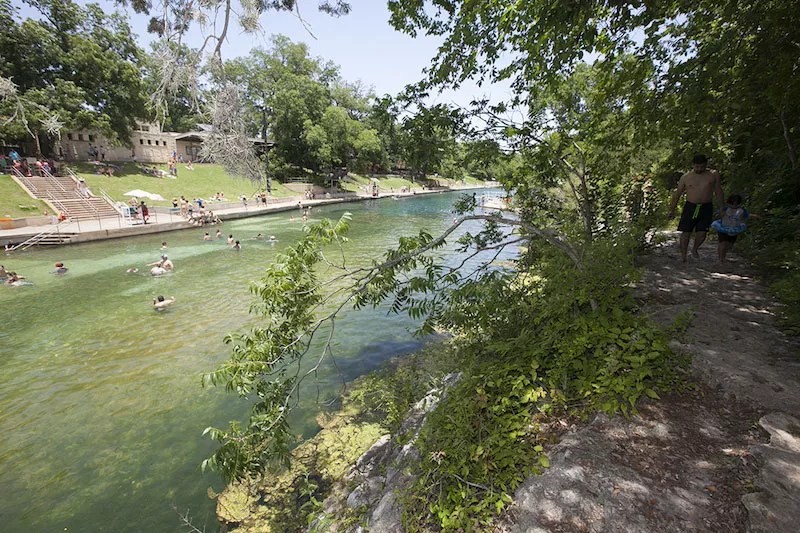
The Trust for Public Land (www.tpl.org) has released its annual “ParkScore” index, and reports that Austin ranks 46th among the 100 largest U.S. cities in ratings for park access, size, and facilities and investment. According to the Trust’s release, Austin’s park system “earned strong scores for park acreage and dog parks, but was hurt by below-average marks for park access.” Austin did move up one spot – from last year’s 47th place – but the change does not reflect “substantive improvements to the local park system.”
Minneapolis and St. Paul ranked No. 1 and No. 2 in the index, and among Texas cities only Plano (17th) ranked higher. Austin’s median park size is 8.5 acres (the national average is 5.0); Austin maintains 1.4 dog parks per 100,000 residents (national average is 0.9). But only 54% of Austin residents live within a 10-minute walk of a park – the national average is 66%.
Austin Parks Foundation CEO Colin Wallis called the city’s ranking disappointing. “What it says is that compared to the cities that take great care of their parks, Austin is lagging way behind. We simply don’t invest the resources to have quality parks for all of our residents. For a city whose residents cherish parks and open spaces, this is unfortunate. I hope our city leadership will take this very seriously as the annual budget process unfolds.”
This article appears in June 9 • 2017.