

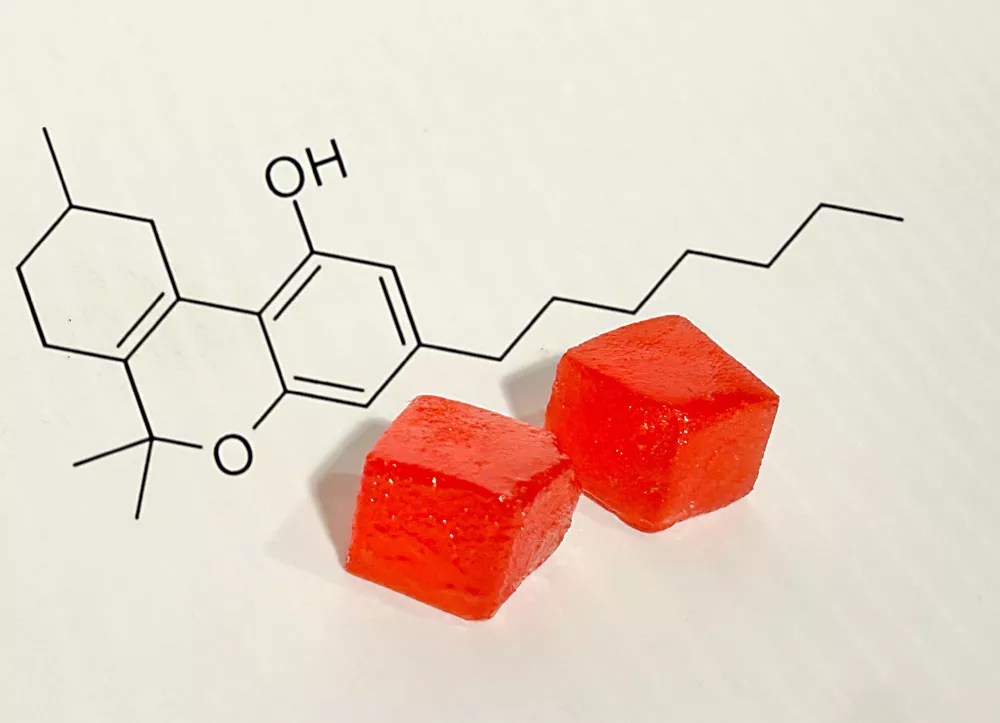
Last week, I paid $3 for a gas station weed gummy. The packaging was tacky, the texture was waxy, the aftertaste was unforgivably chemical, and its advertising boasted a ludicrous 420 mg of various cannabinoids.
It got me faded, alright, but it wasn’t a particularly inspiring high – and I couldn’t wait for it to be over.
I was only experimenting with such an uncultured cannabis product because I suspect it’s an item that may soon be outlawed in Texas.
Following Gov. Greg Abbott’s veto of the highly unpopular Senate Bill 3 that Lt. Gov. Dan Patrick and like-minded Republicans railroaded through the House and Senate, an upcoming special legislative session now looks to regulate the state’s consumable hemp market. Every indication is that one topic of consideration will be banning synthetic cannabinoids.
I wasn’t even positive that the appalling chewable I’d consumed included such synthetic compounds. Looking up its lab report, the product’s prevalent cannabinoids were: Delta-8 THC, CBD, Delta-9 THC, and THCP – the latter being a jumble of letters I’m totally unfamiliar with.
So I reached out to a leading expert in psychopharmacology research, Dr. Ethan Russo – a board-certified neurologist who has spent decades studying cannabis medicine and working on the production of cannabis-derived pharmaceuticals – to ask him if the THCP in products like this were likely synthetically produced.
Russo noted that THCP is naturally occurring in the cannabis plant, but only in trace quantities.
“It is never going to be natural in a commercially available form, so it’s always synthetic,” he said. “And you have to understand that it is 33 times more potent than THC – so nobody needs this. As I’m fond of saying, ‘THC is plenty potent on its own, you don’t need anything more potent than it is.’ [THCP] is not a necessary product and I can’t vouch for any quality control at all on this product. It’s just a way for people to make money at the possible expense of public health.”
Dr. Russo says THCP is analogous to Delta-8 THC, in that it’s also only present in trace amounts in fresh cannabis samples. Because there aren’t cannabis plants with high enough levels of Delta-8 or THCP, it would never be a natural source of extraction. Therefore, products advertising those cannabinoids are almost certainly synthetically produced.
So how do people in laboratories synthesize cannabinoids like THCP?
“Usually with strong acids and toxic solvents – that would be my assured answer,” Russo replied. “It’s a process that really makes it highly likely that there are going to be traces of unwanted chemicals in the preparation. So let’s just call them what they are: contaminants.”
“If you were to prohibit [unresearched synthetic cannabinoids], it needs to be coupled with access to better, safer products. The solution is a policy approach that includes those two prerequisites.” – Dr. Ethan Russo
Synthetic cannabis products are cheaper to produce and have a longer shelf life than their natural counterparts. While Delta-8 products are a significant category in Texas’ consumable hemp industry, they are not the main seller at reputable hemp dispensaries, which see their largest shares of sales in naturally grown THCA flower. Synthetics, meanwhile, are more likely to be purchased at gas stations, corner stores, and those generic hemp businesses that don’t even have a proper name – just a sign that reads “Smoke Shop.”
Getting unresearched synthetic cannabinoids out of the hands of consumers in Texas isn’t as simple as just making them illegal, Russo says.
“It’s complicated because you can prohibit commerce, but that is only opening the door to the black market,” he notes. “The solution is twofold: It is having legal access to natural products that are properly made – and that really obviates the need for these synthetics. So if you were to prohibit those, it needs to be coupled with access to better, safer products. The solution is a policy approach that includes those two prerequisites.”
Seeing the Full Spectrum of Cannabis
The ill-fated SB 3 sought to ban all cannabinoids, except for CBD and CBG. The cannabis plant actually contains at least 150 known compounds with unique properties that influence its characteristics – and all of them, except THC, are non-intoxicating. It’s unclear, at this time, how legislators in the upcoming special session will approach regulating the full array of cannabinoids, but if they were to simply allow CBD, CBG, and a limited percentage of THC, users would be missing out on the benefits of the plant.
For example, multiple hemp shop operators in Austin have told the Chronic that customers who buy CBD oil for therapeutic use are generally uninterested in buying isolated CBD extracts, instead preferring “full-spectrum” CBD products that contain all the elements of the plant because it’s more effective.
The notion that a variety of major and minor cannabinoids, plus other plant elements like terpenes and flavinoids, work best in tandem is called the entourage effect.
“The idea of the entourage effect is that we can think of THC or CBD as the main player or soloist in a symphony of other components that produce a more harmonious result,” says Dr. Russo.
Russo says there is “no question” that using a wide spectrum of cannabinoids is more medically effective than isolates of CBD, CBG, or even THC – and he would know. While working for 16 years at GW Pharmaceuticals, 11 of them spent as the company’s senior medical adviser, he oversaw the development of Sativex, a cannabis medicine that is available in 30 countries and used to treat cancer pain and multiple sclerosis-related spasticity. Russo was involved in 26 clinical trials involving different formations of Sativex.
“It is basically a 1:1 mixture of CBD and THC with a smattering of other cannabinoids and terpenoids,” he explains. “The reason Sativex was composed the way it was, combining an extract from a high-THC plant and a high-CBD plant, was because this combination of CBD and THC was more effective and had fewer side effects. Originally, they tried a CBD extract on its own and a THC-predominant extract on its own, and things just went a lot better with the combination.”
Russo, who also founded the product innovation and research company Credo Science, isn’t surprised that Texas politicians, during the recent legislative session, failed to understand the intricacies of what makes cannabis-derived medicine effective.
“It’s something that is even a little bit foreign to physicians,” he says. “A botanical medicine doesn’t necessarily have one active component but rather a synergy of components that produces a medical effect.”
The Texas Legislature returns for a special session on Monday, July 21, to consider a number of items, including the regulation of consumable hemp products.
This article appears in July 11 • 2025.