

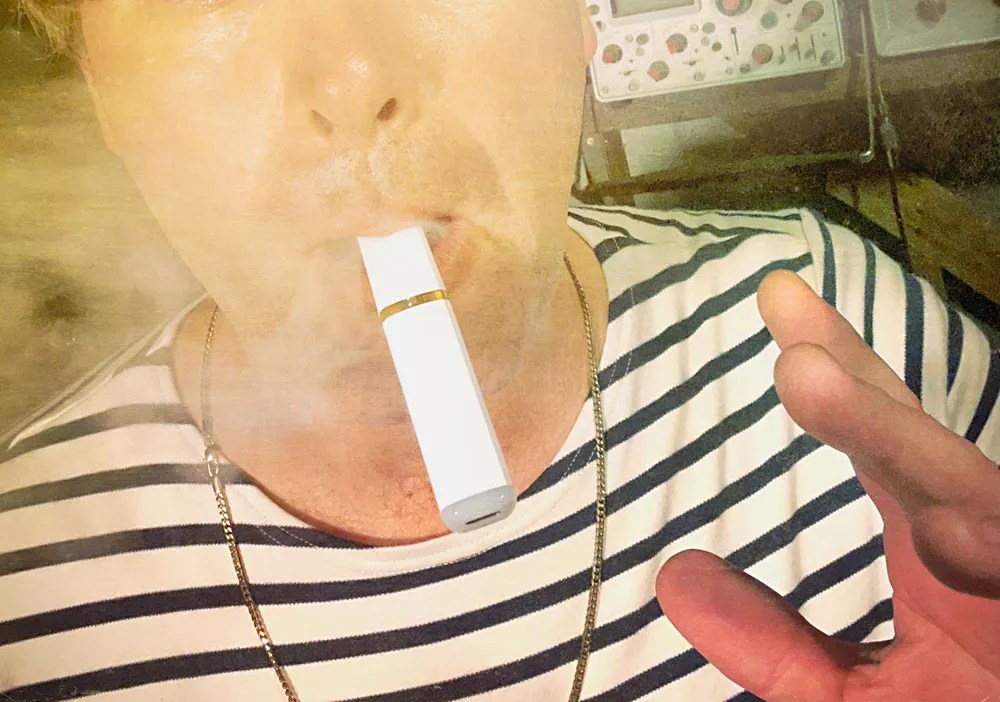
For many consumable hemp customers who enjoy THCA vape pens, the realization is just now setting in that it’ll be illegal to sell those products in Texas come September.
It’s been over a month since SB 2024 was signed into law, but its passage went largely overlooked by cannabis advocates, retailers, and… um… journalists. That’s because the legislation, on its face, initially appeared to be about keeping e-cigs out of the pockets of sneaky teenagers.
The bill, authored by Charles Perry – who also penned the now-vetoed hemp ban SB 3 – specifically prohibited vaporizing devices that could be disguised as school supplies like a marker or mimicked the appearance of a product like earbuds. It also called to ban e-cigs featuring the image of cartoon characters or celebrities.
Later in the legislative process, multiple prohibitions were added to the bill’s language. One of them disallowed the sale of vapes made in China or “a country designated as a foreign adversary.” Another added clause banned vapes containing “any cannabinoids, alcohol, kratom, kava, mushrooms, tianeptine, or any derivatives of those substances.”
That provision, arriving without announcement, transformed a bill about e-cigs into a market-altering cannabis issue – making it a class A misdemeanor to sell disposable vapes with federally legal amounts of THCA or Delta-8 THC.
Nicholas Mortillaro, a cannabis industry consultant, chemical engineer, and co-owner of the Amsterdam-style coffee shop chain LazyDaze, says disposable vape sales represent about 25% of sales at consumable hemp businesses like his. He considers the ban a major hit, not only for businesses, but Texans who prefer to vaporize cannabis products.
“I think SB 2024 is a net loss for public health policy,” he says. “I love flower – and obviously we love flower at LazyDaze, but it is without medical doubt that burning a herb of any kind and inhaling it into your lungs is going to contain lipids, chlorophyll, waxes, and other stuff that’s just not great for your lungs. And while I totally maintain any Texan adult’s right to smoke flower, vaporization is, by an order of magnitude, safer for your lungs.”
The bill’s language does not seem to impact the type of vaporization that cannabis connoisseurs prefer: live rosin, which is a solventless cannabis concentrate that you smoke out of a non-disposable vaporizer. But Mortillaro notes that disposable vape pens, which are inexpensive, discreet, and easy to use, have less of a barrier to entry than rosin products.
“Grandma’s going to have a tough time trying to set up a dab rig,” he asserts. “SB 2024 just takes away a major product category that is much safer for the majority of medical patients.”
Medical Dispensaries Enter Their Feel-Good Era
Nick Fallon, president of marketing for Goodblend, told me that the medical cannabis dispensary is seeing a lot of new interest right now as a result of this year’s legislative session, around which cannabis was a frequent topic of debate.
“It’s a pretty strict program, so it’s not like things move really fast, but this being on the news cycle and being such a big topic throughout the whole year, more people are coming into the store, curious about it.”
The dispensary, which has been one of the three licensed providers in Texas’ medical program, capitalized on that attention by holding a free barbecue at their East Riverside shop on July 12. Brisket-eating visitors got to spin a wheel to win free Goodblend merch and were provided with discounted prescriptions and information about how to enroll in Texas’ Compassionate Use Program. Staffers also raised awareness about what the recently signed HB 46 means for medical cannabis in Texas.
Fallon told the Chronic that the medical expansion bill will be a “game-changer” for dispensaries when it takes effect on September 1.
Not only does it add several qualifying conditions, most notably chronic pain, but it resolves a logistical issue that will make it easier for them to serve their patients: being able to store medical cannabis products off-site overnight.
“Currently, if we drive an order all the way up to Plano and the person doesn’t show up, we have to circle around and drive all the way back to Austin,” says Fallon. “Getting that fixed is huge.”
Fallon says Goodblend’s staff will be doing far less driving under the new framework. For example, they can have a satellite location in El Paso and drive a large shipment there from Austin every two weeks, then have an El Paso-based worker delivering prescriptions locally. Because HB 46 mandates that a cannabis dispensary must have a presence in 11 geographic zones throughout Texas before you can add two stores in any area, it will benefit patients by giving them access to their medicine in a more timely manner.
Dispensaries in the TCUP program are currently allowed to sell edibles, tinctures, beverages, and topicals, but the new law also allows for “pulmonary inhalation,” which is expected to include some combination of inhalers, vaporizers, and nebulizers.
Meanwhile, HB 46 expands the number of dispensary licenses that will be available, tripling the current allowance.
“It’s only 15 licenses, though,” Fallon says when asked if he’s concerned about increased competition in the market. “We still see a lot of opportunity.”
Special Sesh Circles Up
Summer vacation is over for Texas lawmakers. A special session, called by Gov. Abbott, kicked off Monday at the Capitol to address major issues that were still somehow unresolved after politicians spent 140 days making laws… like every classroom being required to present a list of 10 rules that God allegedly carved into stone with his finger 3,500 years ago.
The governor’s agenda includes two cannabis items: “Protecting Children from THC” and “Regulating Hemp-Derived Products.” Their priority status may have lessened though with the inclusion of four flood-related topics and a nationally controversial effort to redistrict congressional maps.
Ahead of the session, Heather Fazio of the Texas Cannabis Policy Center told the Chronic that she expects the hemp representatives to be fighting for attention. She views age restrictions as a “clean bill” that everyone is on board with, but the item for regulation will be more interesting. Fazio sees the erstwhile House Committee Substitute Bill (CSSB 3) as the baseline for those conversations. That bill sought to regulate cannabis similarly to alcohol – with TABC handling oversight – while permitting gummies and beverages up to 10 mg and only allowing flower at 0.3 percent THC.
“The big question is: What are the stores going to be able to sell? Vapes are now outlawed and 0.3 percent THC flower is not realistic,” says Fazio. “We hope to bring up the THC cap because we want people choosing legal instead of the illegal market.”
On the first day of the special session, an undeterred Sen. Perry introduced yet another THC ban with SB 5. At press time, hemp industry advocates were amassing at the Capitol to give testimony against the bill.
This article appears in July 25 • 2025.