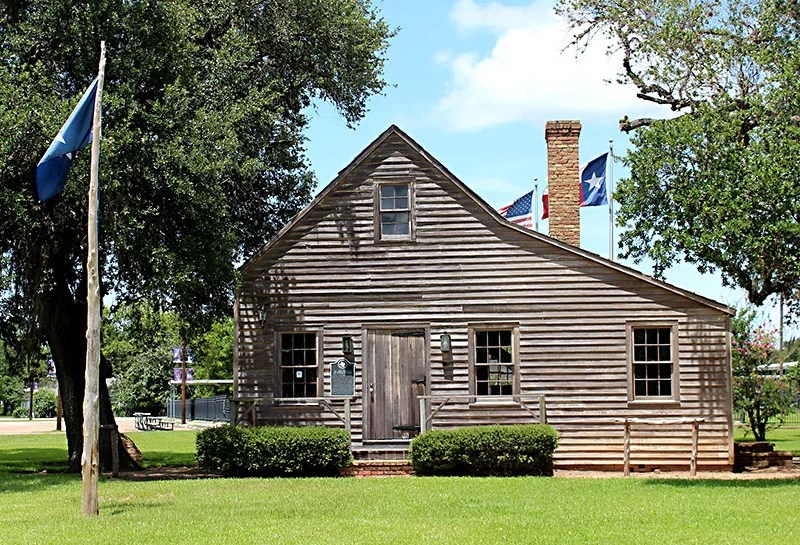
The first capitol of an independent Texas in West Columbia looked like an old dilapidated barn when it was finally demolished.
The hurricane in 1900 that nearly washed away Galveston destroyed the story-and-a-half clapboard building. A replica of the building where the first Congress of the Republic of Texas met was constructed near the original site in 1977.
The Texas rebels began forming a government soon after they declared independence from Mexico at Washington-on-the-Brazos. Following the Battle of San Jacinto on April 21, 1836, the government moved to Columbia, as the settlement was known.
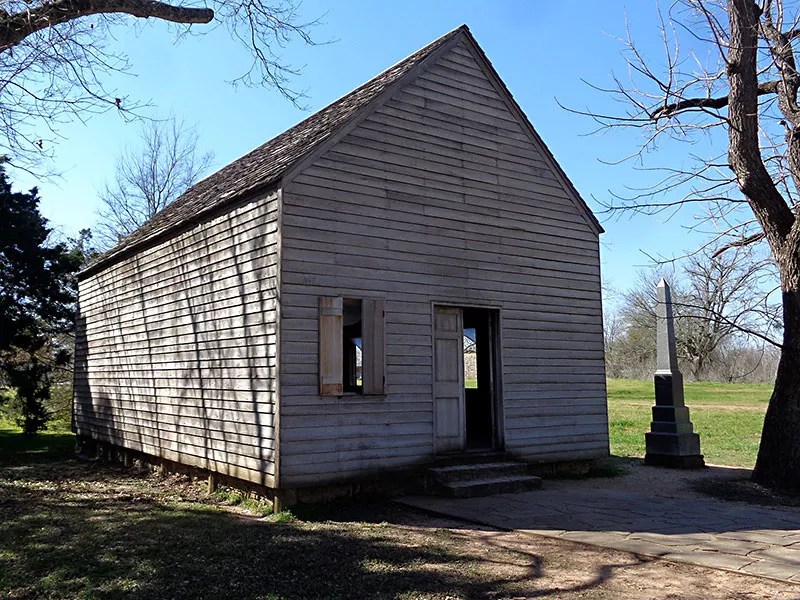
The first elected Congress convened in a former store on Oct. 3, 1836. Sam Houston was president, Mirabeau B. Lamar vice president, and Stephen F. Austin was secretary of state.
Austin died two months later at the home of a friend outside of Columbia. His body lay in state at the first permanent capitol building until he was buried.
Columbia was chosen as the capital because it had the most permanent buildings and the largest newspaper in the republic. The distinction lasted three months before the government decamped to the new town of Houston 55 miles north.
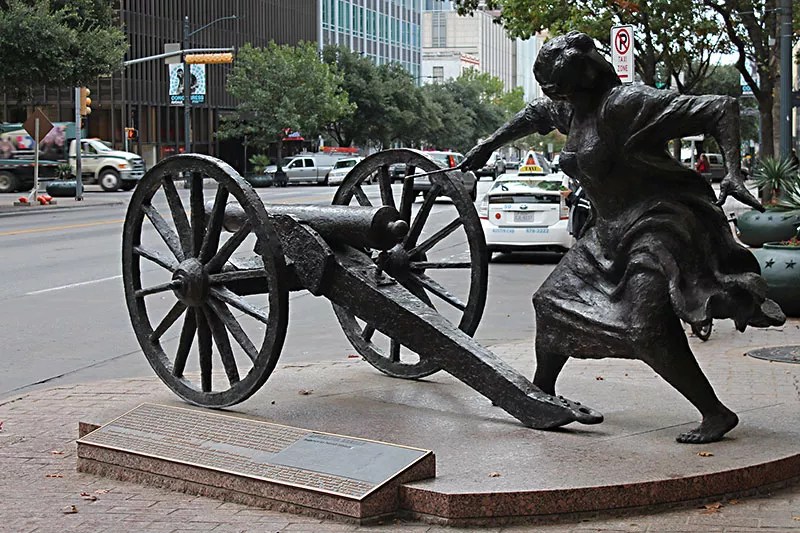
By 1839, Waterloo, renamed Austin, was selected as the capital. The only challenge to the claim came in 1842 when President Houston sent Texas Rangers to remove the archives to Washington-on-the-Brazos. Vigilantes led by Angelina Eberly prevented the removal, and Austin became the permanent capital by popular vote in 1850.
The replica of the first capitol of Texas is at 14th Street and East Brazos Avenue (TX-35) in West Columbia. Tours are available by appointment by calling the Columbia Historical Museum at 979/345-6125.
1,361st in a series. Follow “Day Trips & Beyond,” a travel blog, at austinchronicle.com/daily/travel.
This article appears in August 25 • 2017.