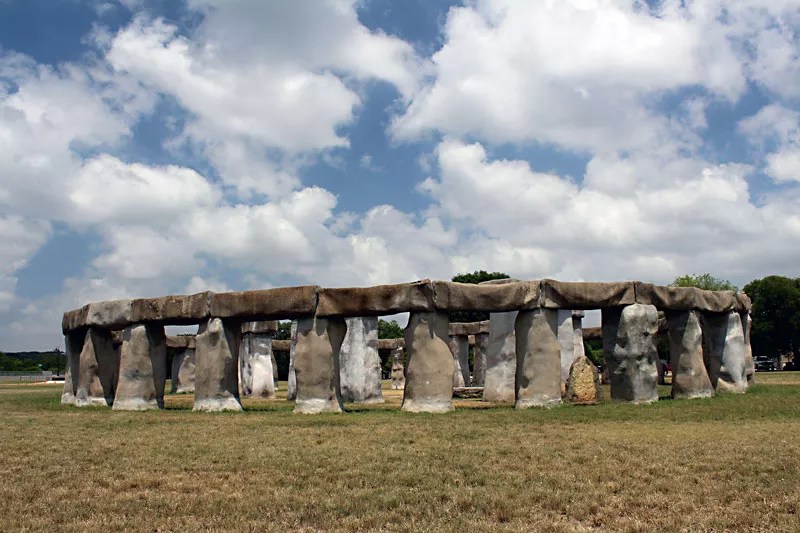
Stonehenge II in Ingram attracts a steady stream of pilgrims to the replica of the famous prehistoric monument outside of Wiltshire, England.
While the origins of the English cultural icon might be a bit murky, the history of the Texas monument has been well documented.
It all started in 1989 when contractor Doug Hill had a large chunk of limestone left over from a patio project. As a joke, he placed it upright in his neighbor’s pasture.
His neighbor, Al Shepperd, liked the addition to his field. The two friends got to talking and decided that the lone stone reminded them of Stonehenge. Pretty soon they were busy constructing a wire-mesh-and-plaster, two-thirds-scale reproduction of the UK landmark.
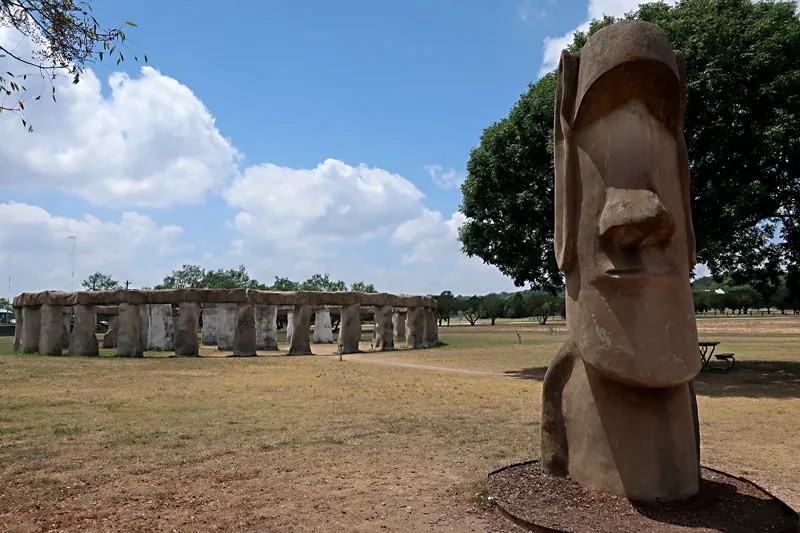
Later, the pair of jokesters added two Easter Island-style heads, one wearing a Texas sombrero.
Shepperd passed away in 1994, and his field outside of Hunt was eventually sold. In 2010, the Hill Country Arts Foundation moved the folk art to its current location west of Kerrville.
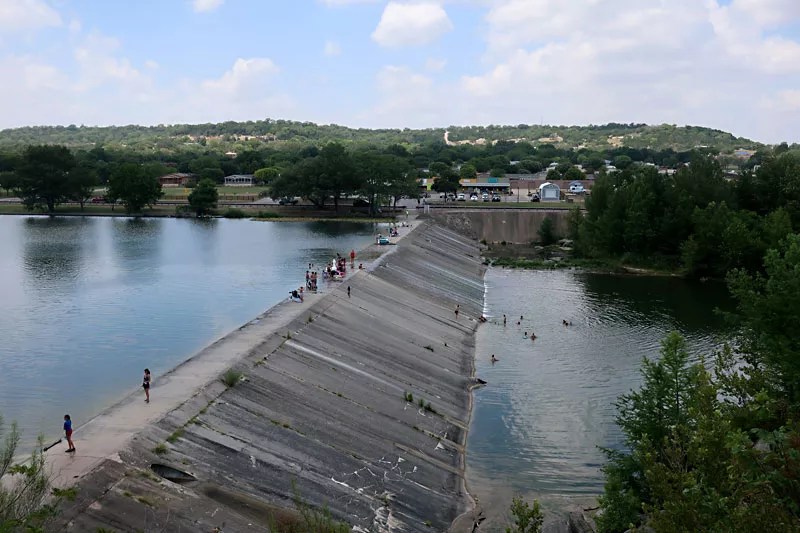
Stonehenge II is in front of the arts center on Highway 39. Continue west on 39 toward Hunt to find three swimming holes where the highway crosses creeks.
The Ingram monument is not the only replica of Stonehenge in Texas. Another one is on the campus of the University of Texas Permian Basin in Odessa. Made of 40,000-pound stone blocks arranged to match the original Stonehenge layout, it is 3 feet shorter. Originally part of a student project, the limestone arches are lined up to mark the Summer Solstice.
The Odessa Stonehenge is north of I-20 and west of the intersection of highways 338 and 191 (East 42nd Street).
1,509th in a series. Follow “Day Trips & Beyond,” a travel blog, at austinchronicle.com/daily/travel.
This article appears in July 24 • 2020.