The Rick Pratt School of Wooden Boat Building in Port Aransas continues the tradition of the fishing village’s iconic all-wood Farley Boats.
“Anything nautical made out of wood we’ll help you build,” says school volunteer Mike McClelland. “This is the only boat-building school on the Texas Gulf Coast.”
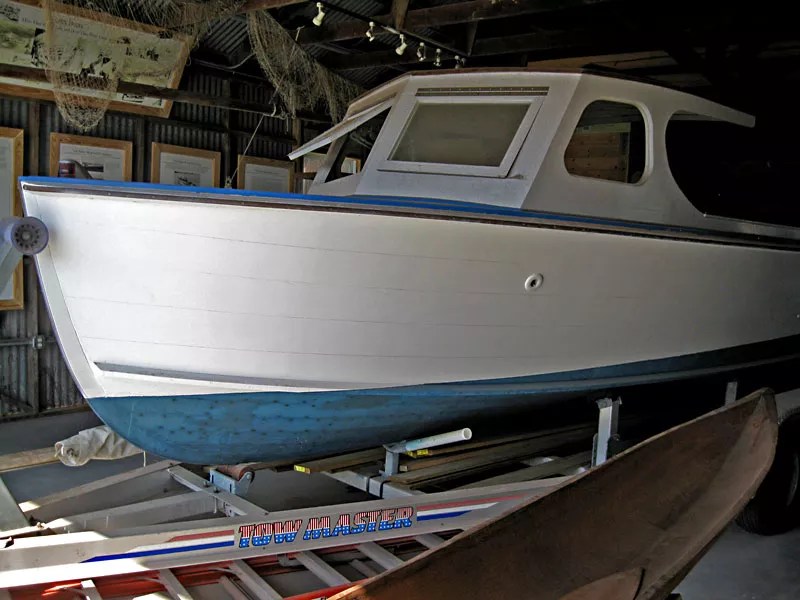
The nonprofit school, an arm of the Port Aransas Preservation and Historical Association (PAPHA), offers two types of skiffs that builders take home. The 13-foot skiff is a dinghy and can be ready for its maiden voyage in as little as three days. The sleek, 12- to 20-foot outboard skiff takes 10 to 80 days.
Fall to spring is a great time to start a boat-building project. All of the work is done at the Farley Boat Works barn, unless you secure one of the four spots at the Port Aransas Wooden Boat Show April 24-26, 2020.
Farley Boats launched in 1915. The wooden fishing boats evolved to chase tarpon. With a tall bow to break the waves and low sterns to land the fish, the crafts were the favored boats for Port Aransas fishing guides. The final Farley Boat was produced in 1973.
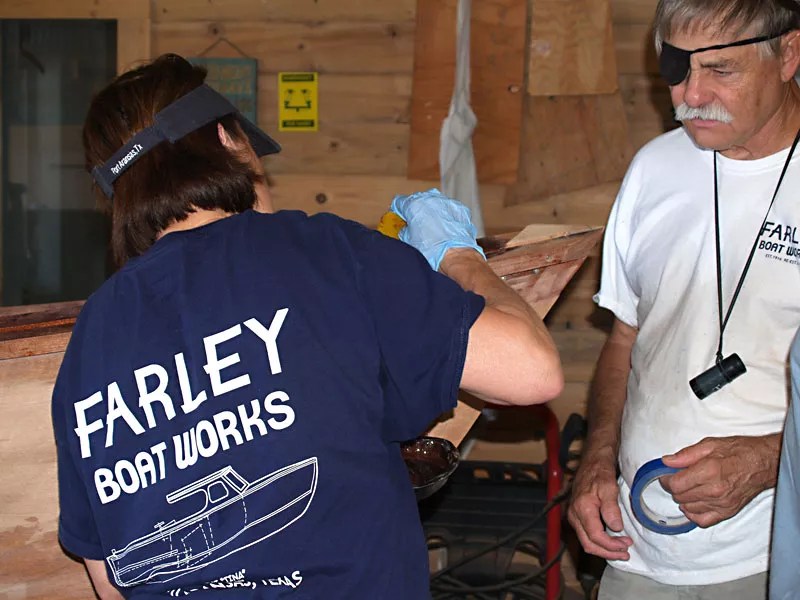
Rick Pratt served as founding director of the Port Aransas Museum until Nov. 30, 2018. He was instrumental in reviving the Farley Boat Works as part of PAPHA. Under his leadership, the Works built more than 100 boats, restored an original Farley Boat, and is rebuilding a Texas scow schooner.
Farley Boat Works, 716 W. Avenue C, Port Aransas, is part workshop, boatyard, and museum. Visitors are welcome to watch the work whenever the barn is open. The Port Aransas Museum is at 101 E. Brundrett at Alister Street.
1,473rd in a series. Follow “Day Trips & Beyond,” a travel blog, at austinchronicle.com/daily/travel.
This article appears in October 25 • 2019.