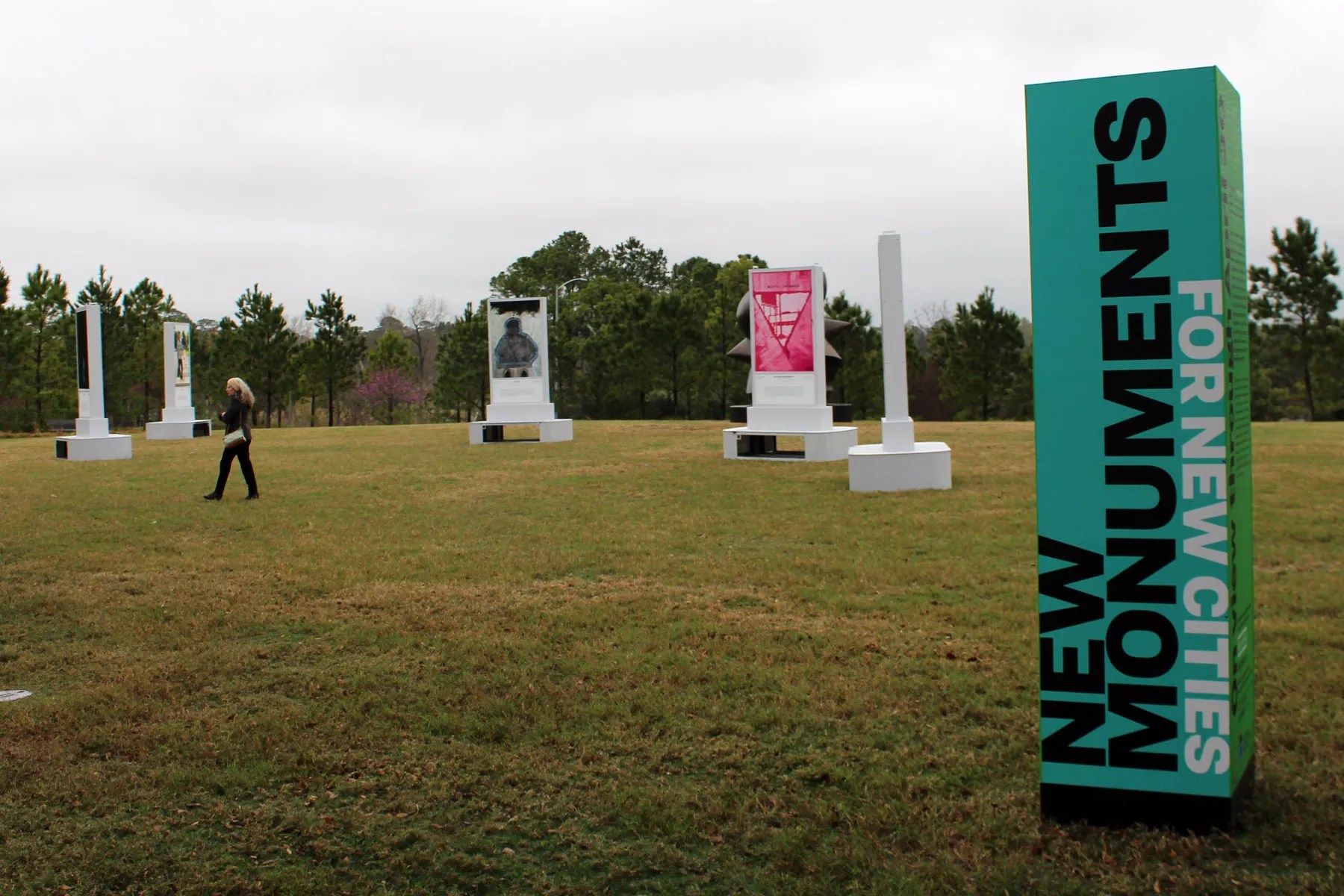
“New Monuments for New Cities” public art project in Houston asks the question: What should modern monuments look like, and to whom or what should they be dedicated?
With communities around the country rethinking public memorials, the organizers of the High Line project in New York City thought it time to take a creative look at what are considered public monuments, says Ana Traverso-Krejcarek, program manager with the High Line Network.
The High Line is a 1.45-mile linear park built on an abandoned railroad viaduct in Manhattan. The High Line Network is a group of 19 infrastructure reuse projects around the country who share a vision of creating new public spaces.
Traverso-Krejcarek says there are more than 100 infrastructure reuse projects happening in the U.S. Only New York City, Houston, Austin, Chicago, and Toronto joined the inaugural art project.
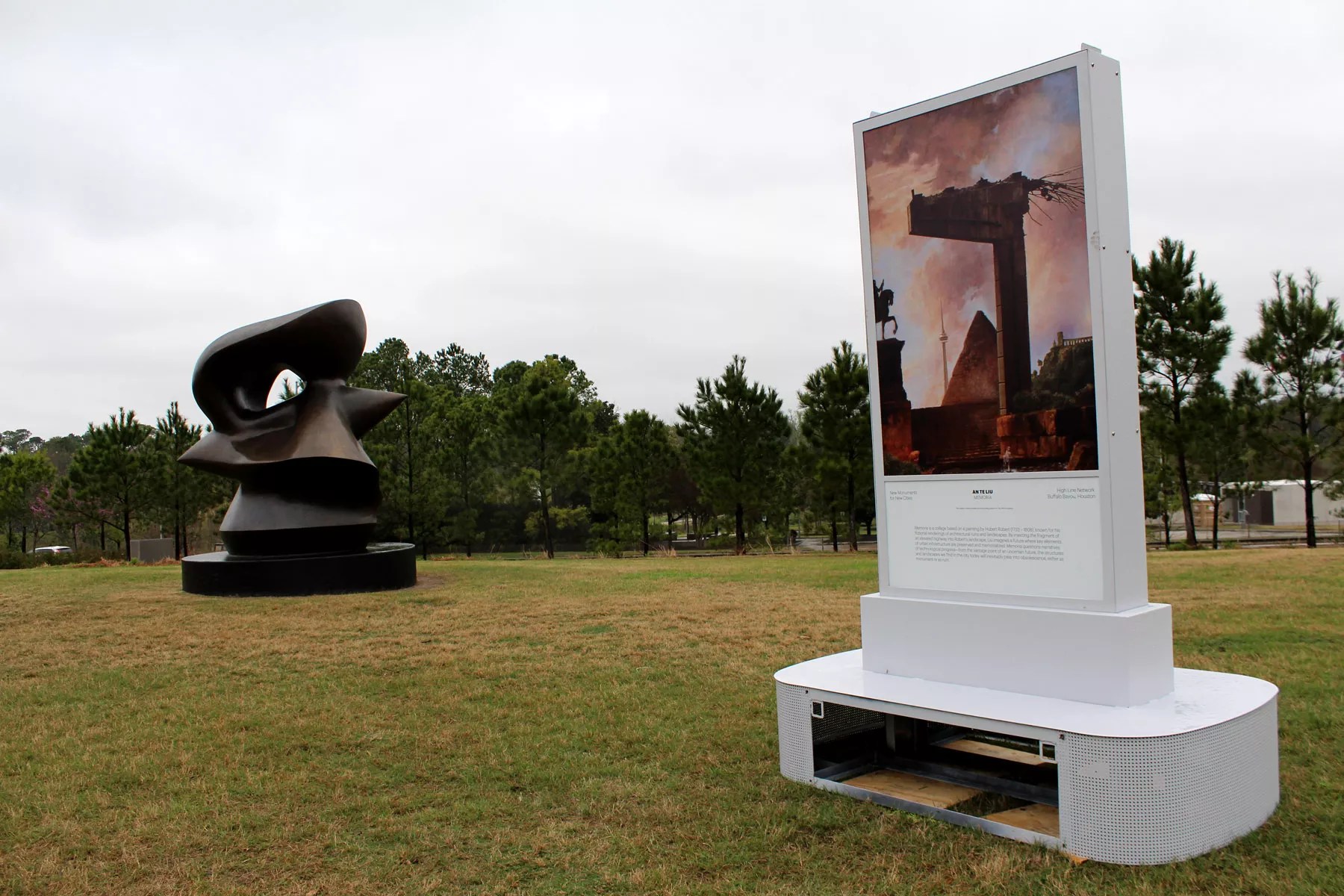
Five artists from each of the five cities contributed to the traveling outdoor art exhibit a concept of what a contemporary monument might look like. The subjects vary from an iconic Houston gay bar to a Chicago skateboarder, and proposed mediums from an archway to a glass window supported by steel. “Some of the ideas are completely fantastical,” Traverso-Krejcarek says. “This is a creative exercise to engage the communities and start a dialogue.”
“New Monuments for New Cities” is on display in the form of posters in light boxes integrated into benches in Buffalo Bayou Park on Allen Parkway at Gillette Street through April 30. Parking is available at the site.
All 25 artworks will travel to Austin (Waller Creek, March-May), Chicago, Toronto, and New York City. For more information go to www.thehighline.org/art/projects/new-monuments-for-new-cities.
1,439th in a series. Follow “Day Trips & Beyond,” a travel blog at austinchronicle.com/daily/travel.
This article appears in March 1 • 2019.