Although the new passage won’t immediately alter what visitors to the cavern north of San Antonio see, it might increase the understanding of how the cave was formed and has changed over time, says Brad Wuest, who owns the cave along with his brother Travis.
The Wuest family settled on the land above the cave in 1883. In 1960, four college students from San Antonio explored the cave for first time. They eventually crawled, climbed, and shimmied two miles into the darkness using gas headlamps not much brighter than a cigarette lighter. The first half-mile section of the cave opened to the public in 1967.
The May expedition was the first major exploration of the cave since the Wuest brothers’ father found the Hidden Passages section leading to the “Dome Pit,” a large chamber stretching 120 feet from floor to ceiling. Near the ceiling they could see, but were unable to reach, another passageway.
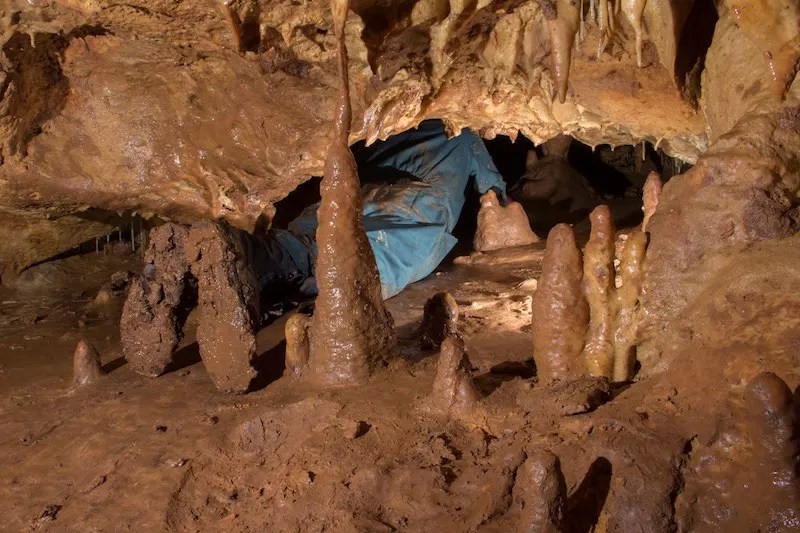
Just to get to the Dome Pit the expedition had to maneuver more than 1,100 feet underground. At one point they passed through a tight 14-inch space called the “Birth Canal.”
The brothers first explored the inaccessible passage at the top of the Dome Pit with a drone on April 17. On the video monitor they saw a pile of bat guano and pools of water partially covered in “cave ice,” a calcite crust on the water that grows about one cubic inch in 100 years. “When we saw that we knew we had to go in there,” Brad said. Having grown up in the cavern, both brothers are skilled spelunkers with experience in caves around the world.
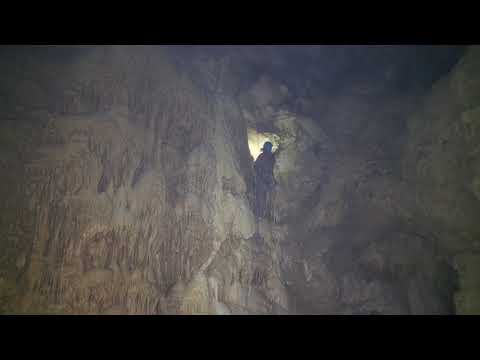
A team of 14 made the trek, including 78-year-old Orion Knox Jr., one of the college students who made the original discovery. Knox eventually had to turn back when the sticky mud sucked the sole off one of his boots.
Eight support members of the team stayed behind in the staging area in the Dome Pit while six members made their way into the passageway to see spectacular cave formations that no human had ever seen.

Carbon dating the bat guano and bones and surveying the passage 145 feet below the surface will give them a better understanding of the cave environment, Brad says.
“It’s an incredible experience to stand where no human has gone before,” Brad says. “It’s exciting and humbling to be surrounded by the incredible beauty of the cave.”

Natural Bridge Caverns is about an hour south of Austin off I-35. For the rest of us, the caverns offers four tours to explore the depths without the sticky mud and tight spaces. The Discovery Tour follows the original explorers’ route for half a mile through the largest and most colorful rooms. The Hidden Passages Tour goes to the last section discovered and is famous for its soda straw stalactites. The Adventure Tour lets visitors get the feel of caving. The Lantern Tour goes below ground with only flashlights to light the way. For more information, go to www.naturalbridgecaverns.com.
Gerald E. McLeod has been traveling around Texas and beyond for his “Day Trips” column for more than 25 years. Keep up to date with his journeys on his archive page.
This article appears in Summer Fun 2019.