

At this time last year, operators and advocates in Texas’ consumable hemp industry were already establishing their goals for the next year’s legislative session: things like age restriction, installing child-safe packaging requirements, and getting products made with synthetic cannabinoids off the market.
Instead, they’ve spent all of 2025, so far, playing defense. Dan Patrick’s effort to enact a THC ban had been hostile and relentless – passing through the Senate, then the House only after a surprising eleventh-hour amendment that reverted a regulatory revision back into a ban, only for Gov. Greg Abbott to later veto that. Stubbornly, the lieutenant governor aided in the refiling of an identical bill during the ensuing special session.
All the while, Patrick publicized the unpopular legislative effort with a series of melodramatic press conferences and a botched spy mission, in which he was caught off guard by a hemp shop employee asking to check his ID. After nine months of roaring, Patrick’s crusade went out like a lamb – conceding with a post on X.
“After long discussions last night between the Governor, Speaker, and me on THC, and continued hours of discussion today, we were not able to come to a resolution,” Patrick wrote on Sept. 3. “I appreciate the effort by Gov. [Greg Abbott] to find a solution. I thank Speaker Dustin [Burrows] and Republican House members for joining the Senate in passing a complete THC ban during the regular session. My position remains unchanged; the Senate and I are for a total THC ban.”
That news was met with muted celebration from consumable hemp stakeholders. For one, Patrick’s push for a ban sucked the oxygen away from more than a half-dozen other more sensible bills, coming from both sides of the aisle, that sought to regulate Texas’ consumable hemp industry – so none of the necessary work had gotten done. Furthermore, it meant that Gov. Abbott was now likely to deal with cannabis himself.
That came to fruition on Sept. 10, when the governor filed an executive order aimed at “protecting children from hemp and hemp-derived products and clarifying regulations pertaining to such products.”
The order, GA 56, delivered a semi-detailed list of 18 directives, including:
• Establishing rules prohibiting hemp product sales to minors. Any business that sells to an underage customer would lose their license.
• Increasing registration and licensing fees to fund enforcement and regulation by the state.
• Standardizing lab testing and labeling requirements for hemp products sold in Texas to include cannabinoid concentration, serving size, and health warnings.
• Strengthening record-keeping requirements on inventory, sales, and testing results.
• Ordering a comprehensive study where state agencies will work with the Texas A&M AgriLife Extension Service to consider long-term regulation solutions.
The most controversial mandate in the executive order is one that restricts the total THC in any product, including the conversion of THCA. Currently, retailers are allowed to sell hemp that is under 0.3% THC, but high in levels of THCA, a natural precursor that converts to THC when heated up.
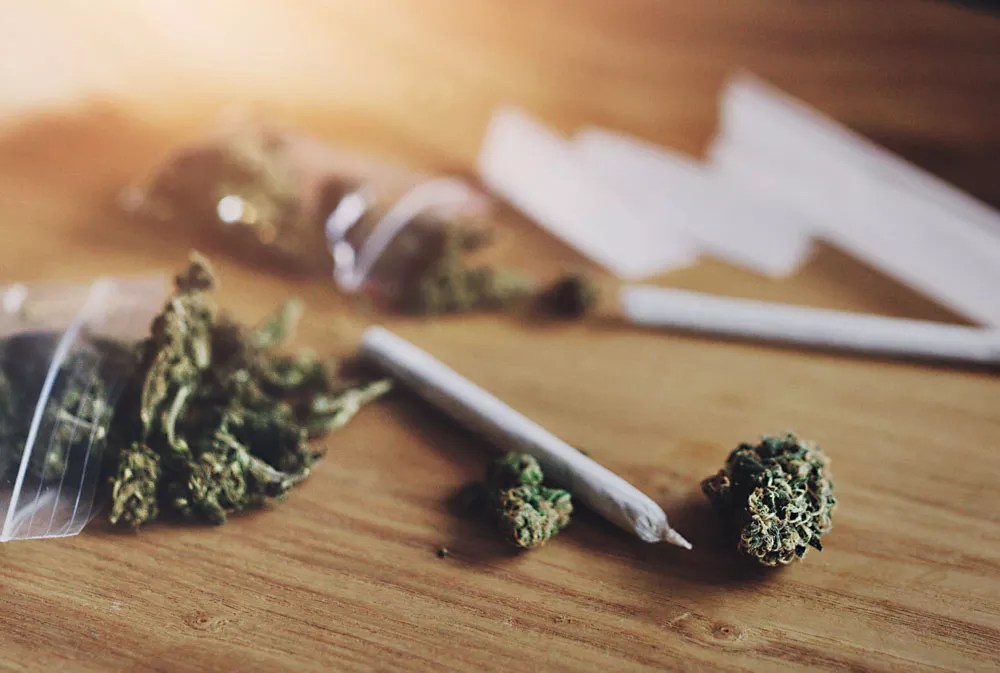
A “total THC” rule wouldn’t have much impact on edibles and beverages, which can contain higher levels of the plant’s psychoactive compound because it’s a just small percentage of the total product by weight. It would, however, have an enormous impact on the market of hemp flower and prerolls – the most natural and unprocessed way to consume cannabis. Hemp that has less than 0.3% of THC and THCA does not get you high and therefore largely lacks the therapeutic and inspirational qualities that consumers enjoy.
According to several hemp dispensary operators in Austin, flower and prerolls are the largest product category for their businesses.
“The issue of limiting total THC to include THCA is not new and will have a significant impact on the hemp industry,” Cynthia Cabrera, founder and president of the Texas Hemp Business Council, tells the Chronic. “Retailers are more likely to be affected because flower can be processed into other products, and some of these issues may be addressed during the rulemaking process. However, combined with SB 2024 [the recent ban on hemp-derived vapes], many stores could still lose a strong revenue generator and face serious impacts.”
In a missive that lauded the governor’s efforts to regulate consumable hemp and keep it out of the hands of children, Texas Cannabis Policy Center Director Heather Fazio cautioned that restricting hemp flower to 0.3% THCA would push consumers toward the black market.
“Prohibiting hemp flower doesn’t eliminate demand – it simply hands it over to the illicit market,” Fazio wrote. “This fuels unregulated sales where there are no testing standards, no labeling requirements, and no ID checks to protect young people. If Texas wants real accountability and consumer safety, we must bring natural flower into the regulated market instead of pushing it underground.”
Advocates will still have an opportunity to shape the details of the regulation. Abbott’s executive order directs two state agencies to make the rules, and that process involves a notice and comment period where stakeholders can provide feedback prior to the rules being finalized.
Those agencies are the Department of State Health Services and the Texas Alcoholic Beverage Commission. TABC has never previously had oversight on hemp and uses a unique regulatory structure called the “three-tiered system,” requiring that “distributors” (wholesale companies) act as a middleman between manufacturers and retailers. It’s plausible that TABC would apply the same framework to consumable hemp, which would shake up an industry that currently allows independent manufacturers to sell directly to stores and consumers.
This article appears in September 19 • 2025.