


Even before the 2016 election, an entire rogues’ gallery of trolls, bots, artificial intelligences, and other malevolent online tools arrived to threaten democracy. As the 2020 elections loom, how will “fake news” and other forms of disinformation influence how we vote?
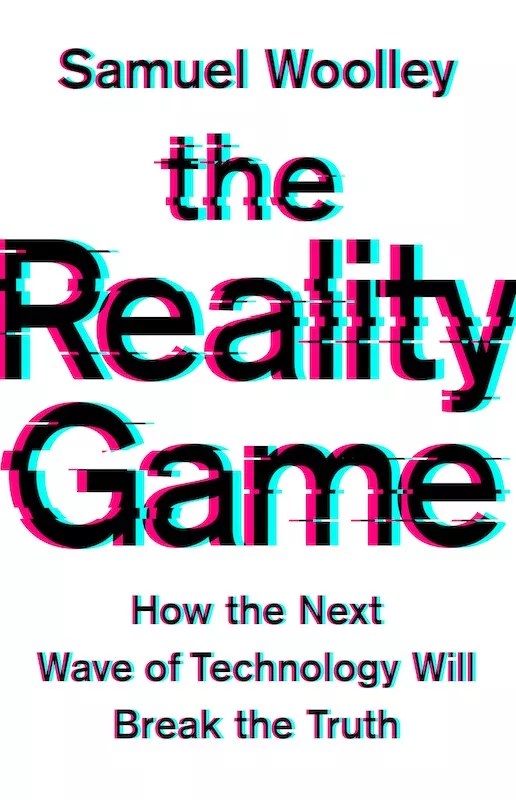
That’s the subject investigated by Samuel Woolley in his new book The Reality Game: How the Next Wave of Technology Will Break the Truth.
Austin Chronicle: Tell me about computational propaganda.
Samuel Woolley: Computational propaganda is a term that [University of Washington Ph.D. adviser] Philip N. Howard and I and other colleagues came up with in 2013. We were seeing that algorithms and automation were playing a huge role in the way propaganda was getting disseminated, [with] fake accounts used to maximally amplify a message. Computational propaganda is the use of automation and algorithms to manipulate public opinion online. It spreads [from] bots to the ways in which trending algorithms on Twitter and Facebook get used to re-prioritize messages.
AC: How do you describe the relationship between computational propaganda and traditional media?
SW: Computational propaganda and traditional media are intrinsically connected. [Our research] focused on social media and the ways in which propaganda flowed through use of automation and algorithms. Often the goal of these propaganda campaigns was to target traditional journalists to trick them into spreading fake stories, especially pre-2016 before everyone got more savvy to the concept of “fake news.”
Simultaneously, journalists have been on the front lines of trying to combat dis- and misinformation. When it came to computational propaganda, traditional journalists have had a struggle to sift through massive amounts of data to verify stories and know whether something is real or fake. In the digital era, this has become a much taller task. One of my hopes is that journalists [will] be able to confront problems of computational propaganda [because] journalists are incredibly important to the solutions.
AC: Is it possible for traditional journalism to fend off propaganda campaigns?

SW: I wanted to write The Reality Game to propose solutions, and a lot of [suggested] policies are oriented toward traditional journalists. There’s been a resurgence of the practice of fact-checking by AP and other organizations, [but] we have to think more about how fact-checking works. Research suggests that simple fact-checking after the fact of a disinformation story often doesn’t work; it actually can [solidify] views. Something journalists can do is not just reporting what is true, based upon verified facts, but also building community relationships. In some ways, the search for objectivity and the quest for getting clicks has resulted in degradation of the relationship between journalists and communities. Journalists have to rebuild that relationship.
AC: What are some of the most surprising ways you’ve seen these propaganda tools used?
SW: The scariest thing I’ve seen is the growing use of individual targeting using social media tools and other technical systems. We’ve seen a change in the way individual targeting happens because of geo-fencing, where political marketers get hold of people’s individual location data [from] third-party apps on cell phones and then be able to figure out where they’ve been, where they’re going, [and] guess what they’re going to do. One of the most worrying things is a trend toward use of machine learning in targeting individuals with political junk, ads, and disinformation.
AC: Why is it so hard to push back against computational propaganda?
SW: It’s challenging because of the size and scope of these campaigns [that] target multiple hundreds, if not hundreds of thousands, of people in particular countries. The fact that social media scaled so fast in an unregulated way has made it so that we’re in a constant game of catch-up. There are just not very good policies on the books. Now we need public interest technologists. We need to make incentives for people who really understand these systems to fight [for the public good].
AC: What do you say to tech companies like Facebook that insist they can’t curate content?
SW: I’d say that they already are curating content, that it’s a false premise. The advent of the news feed meant that they began to curate content. They have become the new arbiters of truth for a lot of people, [so] social media companies have a public responsibility to make a better system than what exists right now.
AC: Do you think such companies should be broken up?
SW: Conversations about breaking companies up are sensible, but I’m wary of breaking companies up until we get them to take responsibility for some of the problems they’ve helped cause, like computational propaganda. We need to hold them accountable first.
AC: What are your biggest fears about the 2020 election?
SW: For 2020, I’m most concerned about the rise of political geo-fencing and individual ad targeting for extremely specific political communication strategies. Super-PACs and campaigns can get hold of [an] individual’s location data by purchasing usage information from third-party app creators [to find out] not only what apps someone uses, but [also] where they use them and when. The more effectively campaigners combine voters’ decoded behavioral data with location data for computationally enhanced communication over social media, the more manipulative they will be.
On the horizon, I’m wary of things like virtual reality, deep-fake videos, and Google Assistant, an AI product that can emulate the human voice [and] make fake phone calls. I worry what the implications of that are for polling or political robo-calling. Generally speaking, the rate of advancement in technology outstrips our ability to get our arms around it. We’ve got to dedicate more resources to thoughtfully design our technology, for baking human rights and democracy into the tech before launch [to avoid] this after-the-fact analysis, where we’re scratching our heads about what to do with things now that are used by a billion people.
Samuel Woolley will speak about and sign copies of The Reality Game Tue., Jan. 21, 7pm, at BookPeople, 603 N. Lamar. For more information, visit www.bookpeople.com.
This article appears in January 10 • 2020.