


Edgar Award-winning Austin author Robert Jackson Bennett takes on the aliens and the atomic age in his latest book, American Elsewhere (Orbit).
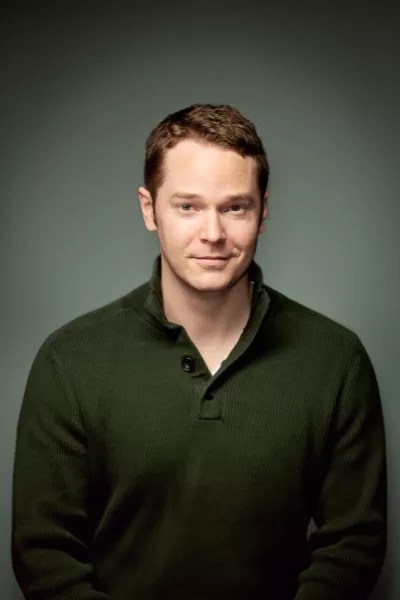
Bennett’s fourth novel, American Elsewhere follows its heroine, Mona Bright, to a tiny New Mexico town to claim a house left to her by a mother she barely knew. Built in the early 1960s around a top-secret, government research lab, Wink seems to be a perfect small town, unchanged by time. But as Mona searches for signs of her mother’s past, the townsfolk of Wink reveal themselves to be rather – unusual. The Chronicle spoke with Bennett recently about his nostalgia for the atomic age, likable monsters, and the inspiration for American Elsewhere.
Austin Chronicle: Where did the idea for American Elsewhere come from?
Robert Jackson Bennett: At the time I wrote it I was very much fascinated with Los Alamos. It’s something I’ve been hooked on since I was a kid in college. That was the birth of the atomic age. Folks started to get more obsessed with the idea of space, of the future. They were very optimistic. That’s the heart of the space age, the idea of the “bright new future.” So what’s kind of weird is that this is a book that couches the idea of the “bright new future” firmly in the past – it feels like the 1950s and ’60s.
Austin Chronicle: So in the past of the book, humans were looking to the future. But in the present of the book, it’s the aliens who are the ones with the naive optimistic dream of the future… Is it okay if I say “aliens”?
Robert Jackson Bennett: I really didn’t write it thinking of it as aliens… I thought of it as Lovecraftian monsters. I guess setting it in New Mexico locked me into extraterrestrials. … It was a weird choice. I wasn’t sure if it would fly when I first had the idea, which is they’re all here not for invasion, but because they want to be happy, and they don’t know how. They look at it like a lot of us do, like a checklist, where there’s the right combination of things, and you do upkeep, maintain it, make sure it’s always clean and working, and then – yeah, of course you’ll be happy. Because why wouldn’t you? Why wouldn’t I be happy? But I’m still not happy. … It was tough for me, because Mona [the protagonist] wasn’t stupid, and I knew that she would be attracted to this, but also know at some level that it’s bullshit. I quickly realized that it wouldn’t be just a story about Mona, it would be about the whole city, the whole town. At some point she becomes less the main character, and more of an event that changes the whole city.
Austin Chronicle: I loved reading her voice. It’s so exciting to be inside the head of a character who’s really on top of things. You can’t put much past her.
Robert Jackson Bennett: She’s very alive. Her voice was the easiest thing in the world to write.
Austin Chronicle: This is your first time writing from the perspective of a female main character. She’s also not white – her mother is Mexican. In the context of this sort of Fifties world, is that important to her character?
Robert Jackson Bennett: I think it forces her to be alone in a lot of ways that she wouldn’t normally be. She didn’t know her mom that well, and her dad’s white and she’s not. So that’s a gap with her already. And I think that her dad, he certainly wasn’t going to hang out with anyone who’s Mexican, so she didn’t get to hang out with anyone like that either. So she’s aware her whole life that she’s different, that she’s not quite like the rest.
Austin Chronicle: She’s different, but she doesn’t know how different.
Robert Jackson Bennett: Right.

Austin Chronicle: In The Troupe [Bennett’s second novel], you talk a lot about fatherhood. This book has a lot of stuff about motherhood in it.
Robert Jackson Bennett: All of my books look at origins in a way, at how things got started – usually how things got started badly. I don’t think anyone really thinks that things got started okay, because if things got started okay, then why aren’t things okay right now? I wanted to look at that. And if you’re looking at the Fifties and Sixties, motherhood is . . . This book is not about work that much, it’s all about the home, this domestic idea. The book is very much obsessed with home life, and the image of the home, and it’s the mom who does that. To have Mona, who is not thoroughly feminine, try and make a home work and it failed, and then be faced with the image of the perfect home, with 3.2 kids and the two-car garage or whatever, try and figure out how she felt about that, that was something that really interested me. And having her say at the end, “This is a bunch of bullshit.”
Austin Chronicle: And the monsters – I’m going to stop calling them aliens – the monsters have mother issues as well!
Robert Jackson Bennett: Everybody has a mother issue of some kind in this book. It’s kind of like a big Greek play. There’s the son who has almost like a sexual relationship with the mom, and there’s the five or six siblings – they probably had a bunch of fights as kids about who’s the best – and having the mom be a distant but extremely controlling character running the show. If you want to get this image of the perfect house, someone who tries for that is going to be sort of controlling. We think of the lady with the Tupperware party flipping out because there’s some dirt on the carpet – “Take your shoes off!” I kind of thought of “Momma” as that times a thousand. She wants everything arranged just so. And the fact that it’s never right says a lot more about her than it does about her kids.
Austin Chronicle: That’s part of what makes the monsters so likable and sympathetic.
Robert Jackson Bennett: They’re kind of sad! These troubled kids trying to dress up like adults and figure out, how do adults do this and feel happy about it, because I don’t. I must be doing this wrong. Which I think is how most adults feel. Everyone feels about 9 years old. No one is naturally 50.
Austin Chronicle: Isn’t that weird? There’s a character in The Troupe trying to be a person, who’s sympathetic in a similar way.
Robert Jackson Bennett: That’s a fascination of mine. Having someone who is not at all, who is just not. There’s a lot of great existential problems that you can introduce when they pop into existence and assume all these roles. They’re not sure why they have to do all these things. That’s something that I’ve had an idea for since I was a kid. Someone just comes into existence. What would they think? How would they feel about all this?
Austin Chronicle: Why do you think that continues to be so fascinating for you?
Robert Jackson Bennett: I’m not sure. I think every once in a while we’re struck by a moment of absurdity. Like when you’re sitting in your car in traffic and you’re like, this is 15 minutes of my life that I’m not getting back, and I’m going to this place, and I’m not sure why. There are different points where you kind of wake up, look past all the ephemera around you and the basic trappings of your everyday life. And you realize, you know, maybe it doesn’t have to be this way. Like a religious moment. It’s a point in which you gain a lot of perspective which your conventional life would not allow you to. A larger perspective. And these guys who just popped into existence, they would have the largest possible perspective of anybody.
Austin Chronicle: Do you think you can maintain that perspective as a person, not as a character in a book? Beyond the moment?
Robert Jackson Bennett: Probably not. That’s why there’s only a handful of prophets, and a lot of followers.
This article appears in February 8 • 2013.