


The Texas Book Festival runs Oct. 31-Nov. 1 at and around the Texas Capitol grounds. All events are free. For more info, including schedule, visit www.texasbookfestival.org. For previous coverage of Texas Book Festival authors, visit austinchronicle.com/tbf.
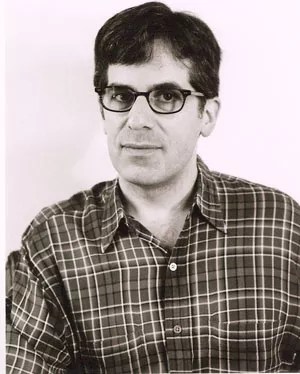
Bite the Big Apple: Jonathan Lethem’s ‘Chronic City’
“It all feels a little plotty to me,” says former child actor and bon vivant Chase Insteadman at a sort of man-behind-the-curtain moment in Chronic City, Jonathan Lethem’s appallingly dense Manhattan epic. It’s a winking nod, one of many, at the novel’s layers of invention – it’s all parallel narratives and multiple meanings, exploited naivete and escaped giant tigers, conspiracies and astronauts and rampaging robots, a labyrinth of cultural arcana and self-reference, simulacra and virtual reality and all that post-post stuff – that both make its magnificence possible and stir its harshest critics. “I was trying to get at the way contemporary life can feel totally absurd, like a cartoon or simulation of some kind,” explains Lethem on a cell phone from somewhere, amiably previewing his impending appearance at the Texas Book Festival, “and yet we’re condemned to live in it and to taking it completely seriously. It has the power to break our hearts.”
The title’s “Chronic” alludes to not only what’s become the most obvious association (Dre’s not dead) but to the inexorable nature of New York’s self-destruction and reinvention – a quality the Brooklyn-identified Lethem finds embodied in the Upper East Side. “It’s the ultimate citadel of power and money,” he says. “But the far side of it is sort of this grubby, really pedestrian place. What I wanted to get at is that this place could be so transformed by these projections of power and money and aspiration that it’s become a kind of virtual reality, a kind of bubble city, but then underneath that there’s always this undertow of normality, people just clinging to rent-controlled apartments and shopping for moldy apples at the Korean deli or whatever. The two coexist forever.”
Of course, the role of the chronic shouldn’t be understated, either. When the woebegone Chase (whose astronaut girlfriend, stranded in space, writes him impossibly sad letters that are published in The New York Times) attaches himself to a former critic/broadsheet artist and instant mentor Perkus Tooth – both swirling in the outer eddies of bygone cultural currency – the two embark on a reefer-mad tutorial, freewheeling through an impossible maze of sociopolitical connections and esoteric associations, the kind only designer weed can fuel. It could be said that these rambles form the book’s core; it could also be said that their inclusion has made Chronic City vulnerable to being labeled a “stoner novel,” though not always disparagingly.
For his part, Lethem is surprised at the focus on his inclusion of what is by now a formative part of most everyone’s experience. “It’s something people do,” he says. “I still idealize that experience even if I don’t think it should necessarily last for too many years. It was a way of shaking off the received condition of normality. It’s also comic – and tragic – because it’s so brief-lived, and it collapses into the hunger for hamburgers and the need for sleep. It sort of compresses the idea of questing to break from the ordinary and falling short into one chaotic evening.”
Perkus’ compulsive searching – his embodiment of the act of “following every cultural clue to its utmost point of relevance, to believing that it’s significant to your own experience,” as Lethem puts it – is, of course, a mirror of but ultimately antithetical to the search for authentic connection. It’s clear that the search for emotional authenticity – and its dopplegänger, the kind of clever, learned, connect-the-dots theorizing that can serve to keep authenticity at bay – is crucial to Lethem’s fun house of a tome. Alienation and return are Lethem’s landscape, the spectrum he swings in, but he pretty much always lands on the side of complicated humanity.
“For me it’s a question of being driven to the brink of the inexpressibility of what you feel you see about the world,” he says. “For all he’s able to enunciate what’s wrong, Perkus suspects that he knows things that he can’t make anyone else feel, no matter how hard he tries. That’s when you become a kind of monster. Or self-destruct. Fortunately, it’s not usually a terminal condition.” – Cindy Widner
The World as It Isn’t
With Robert Olen Butler, Jim Crace, David Eagleman, and Jonathan LethemSaturday, Oct. 31, 2:30-3:30pm, Senate Chamber

Distress Call
Margaret Atwood, internationally acclaimed author of the Booker Prize-winning The Blind Assassin, The Handmaid’s Tale, and other fine novels, knows Texas – a little.
“I’ve lived in San Antonio,” she says. “I’ve been hither and thither. What is the wonderful park in Texas? I keep thinking it’s called Grand Bend.”
Big Bend?
“Ah, Big Bend,” she says. “We had a very pleasant time there and went white-water rafting.”
The Chronicle recently spoke with Atwood via phone, in a car, between hotels on her international book tour for The Year of the Flood, this fall’s follow-up to her speculative-fiction triumph Oryx and Crake. – Wayne Alan Brenner
Austin Chronicle: With the ubiquitous Internet presence of people these days, do you think in-person appearances will become more or less important for the promotion of books?
Margaret Atwood: I think it’s probably going to be a little of both. You don’t need the personal appearances to make a connection of some kind; but once you’ve made the connection of some kind, then people are quite tickled when you turn up in person. I now have about nine thousand, six hundred new best friends that I’ve got since August the 20th. And they’ve started a Twitter feed, and my best friends are very helpful. If I get into trouble and I can’t figure out how to work my Wordpress blog, they’ll send me helpful hints, they’ll answer my questions and pleas for help. Some of them turn up at events and bring me organic coffee ….
AC: What about the negative reactions to your remote booksigning device?
MA: You must have read the early negative reactions, in which people didn’t understand what it was. They thought it was like an auto-pen, that it signed all by itself when you weren’t there, and it’s not like that at all. … My pen is the author on the one end, the thing that signs with ink in it on the other end, and the author is signing the person’s book in a different city. It’s a unique, one-off, one-time-only writing event – a unique pen-and-ink signature. Or it’s not just a signature. I mean, you can draw a picture of a cat, if you want, anything that you wish to. So the initial negative opinions turned right around, and now even book collectors, when we do these events, say “Could you write that this was signed by the long pen?” Because those ones are rarer.
AC: When you say “drawing a cat” … I understand that you’ve drawn comics in the past?
MA: I still do them from time to time. There’s a series I was doing to make my publishers feel guilty called Book Tour Comics.
AC: And did it work? Did they feel guilty?
MA: No, no, you can’t make them feel guilty. They have no guilt.
AC: I was at the South by Southwest Festival in Austin this past spring, and there was a Penguin publishers’ panel, and none of them seemed guilty, as you say, or shamed. But they did seem really fearful.
MA: They should be fearful, because everything is moving. Remember when the wall came down, the Cold War wall? All the chess pieces that had been frozen in place for so long all started to move. And those moments of transition can be quite frightening, because nobody knows what’s going to come next. And this is what is happening with publishing and all forms of communication, such as newspapers, right now. Different forms of technology have changed the way people exchange information and tell stories, and nobody knows what the outcome will be. So, in a way, it’s a moment like the invention of the printing press, which let loose a whole bunch of things that were not anticipated.
Margaret Atwood
Moderated by Benjamin MoserSaturday, Oct. 31, 3:30-4:15pm, Paramount Theatre

The Who’s Who of You: Dan Chaon’s ‘Await Your Reply’
You are not who you were 10 years ago, five years ago, last week. Today’s you is tied to memories – your own and those around you. In his darkly elegant novel Await Your Reply, Dan Chaon takes readers on a journey of forgetting. “I find myself interested in the ways in which we conceptualize the people we are going to be, and that’s at least partially fiction,” Chaon says. “The paths people take are predicated on projecting the kind of person they want to be.”
Chaon’s novel alternates between three storylines: a twin on an endless search for a missing brother who dons new identities seemingly on a whim, an orphaned recent high school graduate who runs off with her former teacher, and a young man whose recently rediscovered father convinces him to shed his own identity. The three plots crash together as the book reaches an intriguing conclusion.
The three-prong structure is becoming a Chaon trademark. He used it in his first novel, You Remind Me of Me, and his most anthologized short story, “Big Me,” flips between three realities experienced by a young-boy-turned-man. “I realized you can build a novel like you build a short story collection,” Chaon says. “You can use the chapter as a building block that feels similar in construction to a short story. I really like that multiple points of view. I like the way you can create a lot of tension between separate narratives.”

In high school, Chaon worked nights as a disc jockey at a Nebraska radio station and later played music in nightclubs, an influence that extends to his writing, which he compares to collage-making. “There’s something to be said for getting yourself in the right frame of mind,” he said of the playlists he compiles to listen to as he writes. “I tell my sons that when Daddy is wandering around the house or sitting staring out the window listening to music, he’s actually working.” For Await Your Reply, the playlist (viewable at www.last.fm) includes moodier songs by acts ranging from Kathleen Edwards and Tom Waits to Texans Salim Nourallah and Micah P. Hinson.
That music is another tether to identity for Chaon, who was raised by adoptive parents and wondered if fate could have given him another, different life. “In some ways I’m writing about lost people,” he says. “I’m writing about people who are able to slip loose of their lives because they don’t have that connection to family and community and friends that you need to ground yourself to the world.”
Chaon’s influences are clearly on display in his novel: from Raymond Carver and Alice Munro to science-fiction and fantasy greats Shirley Jackson, H.P. Lovecraft, and Stephen King. But Chaon’s biggest influence is Ray Bradbury, whom Chaon wrote to as a junior high assignment. It developed into a correspondence that lasted a few years, and Bradbury gave feedback to Chaon’s first stories. “If that had not happened, I may not have had the same confidence that led me to become a writer,” he said. – Joe O’Connell
Writing in the Shadows
With Kyle Beachy, Scott Blackwood, Dan Chaon, and Amelia GraySaturday, Oct. 31, 11:30am-12:30pm, Capitol Extension, Rm. E2.012

Rethinking Our Place in the Food Chain: Jonathan Safran Foer’s ‘Eating Animals’
What began as the simple urge to think critically about what we put into our mouth-holes with an eye toward the care and feeding of a newborn turned into a three-year project for quirky postmodern novelist Jonathan Safran Foer. He has added his voice to the chorus of food pundits with his latest book, the nonfiction Eating Animals, most recently on Larry King Live, where Foer found himself debating the relative merits of eating meat alongside the president of the American Meat Institute, a foodborne-illness attorney, and Anthony Bourdain, among others.
But Foer does not count himself to be a food pundit. “I consider myself a dad who spent three years thinking about this stuff,” he insists. “What was revealed to me on the show – I’m not a nutritionist, a farmer, a lobbyist, a cook; I’m not any of the kinds of things that might suggest I would know a lot about [the role of meat in one’s diet] – it was so obvious to me that these people know nothing. It really spoke to the places people have to reach in order to justify [eating meat].”
The central argument of Eating Animals is not a case for vegetarianism, although that could certainly be read as an underlying motive. Instead, Foer, through his own research and logic, makes a case for thinking critically about what’s really going on in this country’s meat industry and the ethical challenges presented by those hard truths; in doing so, Foer gives a master class in rhetoric. He writes, for example, “If we were to one day encounter a form of life more powerful and intelligent than our own, and it regarded us as we regard fish, what would be our argument against being eaten?” Indeed, the way we talk about food and the way the industry talks about food is a buffet of bad argument.

Of the pro-meat camp, he says: “I don’t know if it’s the case that they literally know nothing or if their arguments are so obscure that in order to make them they have to reach to the far edges of what’s reasonable. It’s a battle to make points rather than a struggle to find actual meaning.” And Foer is disinterested in making any definitive claims about the rightness or wrongness of eating meat. “The book leaves as an open question what people think of as being the most important to this conversation: Is it right or wrong to eat animals? What I found in my three years of thinking about it is that there is a very comprehensive argument against eating factory-farmed meat, or eating meat more generally, but it took me 300-odd pages to present that argument.”
Foer’s project speaks to the practice in our society of the logical contortions we make in order to justify a practice that might be ethically suspect. Despite the discomfort it may cause, with Eating Animals, Foer sets forth a model of thinking critically about big issues and facing the nasty truths that are revealed in the process. – Melanie Haupt
Are You Gonna Eat That?!
With Novella Carpenter, Jonathan Safran Foer, James E. McWilliams, and Jason SheehanSunday, Nov. 1, 2-3pm, House Chamber

Her History: Nadine Eckhardt’s ‘Duchess of Palms’
Nadine Eckhardt could have written a trilogy, sure. Her 2008 memoir, Duchess of Palms, encompasses seven decades – or roughly six more than are covered by The Gay Place, the tri-part Texas classic novel penned by her first husband, the late Billy Lee Brammer – and the material could easily justify an epic.
Instead, Eckhardt’s honed, elegant account of her life and milieu – her beauty-queen McAllen girlhood, marriages to Brammer and to U.S. Rep. Robert Eckhardt, long and complex associations with the Johnson administration and other D.C. heavyweights, and multiple incarnations at a sometimes ridiculously mythic, bohemian/political nexus of power, parties, and social upheaval – weighs in at just over 100 pages.
That’s because Eckhardt keeps up. “The thing is, women live a long time,” she says by phone from her Austin home, where she is sorting out her meticulously kept archives. “Things just don’t stay the same. Our brains move really fast now, so I knew that I had to grab the reader – and to keep the reader, I was going to have to make it a fast read.”
Duchess of Palms is that; it’s also a cheerful corrective to the revisiting and revisionism around the Fifties and early Sixties that’s been cropping up of late. While Eckhardt acknowledges the sort of tinkling bohemian glamour and just plain fun of consorting with Austin’s intelligentsia and D.C.’s power brokers in those decades, she also makes it clear that double standards, expectations of docility, and having her work overlooked held little appeal for her.

“For some reason I just didn’t buy the mores of the Fifties,” she says. “It was just so different. We still wore white gloves back then. The Sixties, with the Vietnam War and everybody smoking pot, that changed me a lot – and the women’s movement. And I’m still changing.”
With wicked efficiency, Duchess of Palms flays the mythology of the rascally genius – artistic or political – who prevails in spite of himself (but by himself), laying bare the real, necessary, and usually unacknowledged work of the women around him. This demystification can take the form of exposing Brammer’s penchant for grilling Eckhardt about flirtations and affairs for his literary use – “That was a really tacky thing he did,” she says. “Because Bill was doing the same thing I was doing – he was having affairs” – or noting the prevalence of a Fauntleroyish obliviousness to the essential activities of political wives, from Eckhardt to Lady Bird.
Not unsurprisingly, Eckhardt’s book makes the point that just because women were then able to control some aspects of their lives, expressing power and intelligence through available means – marriage, motherhood, and, in Eckhardt’s case, drop-dead beauty – doesn’t mean they weren’t still furious about the limitations.
On the other hand, the Fifties’ notorious sexual repression (rumors of which seem to have been exaggerated) largely passed her by. “I had a lot of great affairs,” she says. “I’ve pretty much always done whatever I wanted to do. I’ve had some incredible men in my life.”
Eckhardt’s directness, humor, and uncanny insight prevail today, evidenced in her willingness to dub George W. Bush a “little moron,” Bill Clinton “a drag” on Hillary, and LBJ a “blatant womanizer” who would warn her to “put on her running shoes” when she visited but whom she deemed to be in possession of dealmaking chops John F. Kennedy could have never summoned.
“I told somebody the other day that Obama should be channeling Lyndon and dragging Chuck Grassley in there and tell him he better get with the program,” she says, “and old Max Baucus and those idiots – kicking ’em in the butt. But Obama is being too fair.”
Like I said, the woman keeps up. – Cindy Widner
My Most Unforgettable Character: Me
With Nadine Eckhardt, Diana Welch, and Diane WilsonSaturday, Oct. 31, 2-3pm, Capitol Extension, Rm. E2.028

Brace For … Colin Beavan’s ‘No Impact Man’
Colin Beavan is busy. He was busy for a year not consuming anything (no electricity, no paper products, no non-human-powered transportation, etc.) for his No Impact Project, which spawned a book, a blog, a movie (see Film Listings for review), and an enviro superstar. Now, he’s busy accommodating the onslaught of press requests he gets from all around the world; he put some of that experience to the test when he recently spoke with the Chronicle from New York City. – James Renovitch
Austin Chronicle: Do you really expect Texans to give up their air conditioning?
Colin Beavan: What ways there are to adapt for Texans are different than the ways there are for me as a New Yorker, and I don’t think it’s my job to tell Texans what to do. It’s Texans’ job to do that. Part of my job is to wake people up to the possibilities. If living in Texas means that we can’t turn off our air conditioners, then that points to making sure that we let our representatives know that we want our electricity produced renewably.
AC: Did the press attention affect your environmental outlook?
CB: Halfway through the year I went on Good Morning America and I said, “It’s not important that everybody does what I do; everybody has to do their own little bit.” I was almost backtracking from my own thing. The press storm came so early, before I had studied everything. The difference now is I don’t think that’s really true. I actually think that the more each of us can do, the better. I think we’re in a real emergency, and we all have a responsibility.
AC: How did the many media outlets you used pay off monetarily and personally?
CB: I have to sell a lot of books before it pays off monetarily. One of the things that was amazing about the blog was that many people started gathering and reading and having discussions. The book is hugely satisfying because it’s a place where I did get to sit down and put down my thoughts. … The documentary is not my movie, but it attracts people that the other media don’t attract. … I don’t control what’s in it, and it’s a little more like people talking about me than me talking about me. But I also appreciate that it appeals to the sector that might not read books.
AC: What about the critique that the No Impact Project was a stunt more than anything?
CB: Some people are going to march on the Capitol, some people are going to get on their bikes, some people are going to call their senators, some people are going to be completely antagonistic to those approaches, but they are going to be willing to start looking at their own lives. The discourse tends to be this either/or approach, when it should be every shoulder to the door, every approach we can think of to engage people. If a little sensationalism is what it takes to get people to pay attention, then so be it.
No Impact Man: The Environmental Adventures of a Guilty Liberal
With Colin Beavan; moderated by Sam MartinSaturday, Oct. 31, 11-11:45am, Capitol Extension, Rm. E2.016
This article appears in swine flu.
