Schwarzenegger Terminates Hemp-Farming Hopes in California
Guv's hemp-farming bill veto a "letdown" for farmers
By Jordan Smith, Fri., Oct. 6, 2006


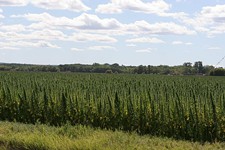
The bill, a joint endeavor of San Francisco Democrat Mark Leno and Irvine Republican Chuck DeVore, the California Industrial Hemp Farming Act would allow farmers to cultivate strains of industrial hemp known to have an extremely low amount of tetrahydrocannibinol, or THC, the main psychoactive ingredient found in marijuana. Indeed, hemp, for years one of the staples of the American agricultural economy, is non-narcotic. Still, thanks to the vagaries of language codified in the federal Controlled Substances Act, the difference between the two strains of plant known as Cannabis sativa have been forever muddied, leaving the U.S. Drug Enforcement Administration authority to regulate agricultural hemp. As a result, the U.S. is the only developed nation without an established hemp crop. And although products made from hemp – everything from body-care items to food to clothing and other textiles – are legal to process, sell, own, and consume here, it is, by default, illegal to grow hemp, meaning all hemp products – a $300-million-a-year industry, and growing – must come from plants imported from China, Europe, and Canada.
Other states – including Hawaii, Kentucky, Maryland, and Montana – have passed laws to legalize hemp-farming, based on the DEA granting a permit to do so (which the narcos have done only once, to researchers in Hawaii – a permit that has long since expired). But the California legislation, AB 1147, asserted that the DEA in fact has no legal right to intervene in hemp-related agricultural matters. Indeed, under the CSA, the term "marijuana" exempts from regulation the portions of the plant commonly used for industrial purposes – including the fiber and seed oil. But the ambiguity of the wording, and the wimpiness of politicians, seemingly incapable of asserting the very real and plain differences between hemp plants and marijuana plants, have allowed the lumping together of hemp and marijuana to continue, thus allowing the DEA to keep wielding an iron fist on agricultural matters. "AB 1147 would have reined in the overreach by federal authorities that has prevented the nondrug industrial hemp varieties of cannabis from being grown on U.S. soil for fiber and seed," Steenstra said. And with the veto, "hemp will continue to be the only crop that is legal to import, sell, and consume, but illegal to grow, in California."
Got something to say on the subject? Send a letter to the editor.