Book Review: New In Print
If you have to staycation, at least see the world via books
Reviewed by Sarah Smith, Fri., July 29, 2011



East of the West: A Country in Stories
by Miroslav PenkovFarrar, Straus and Giroux, 240 pp., $24
Paris: The Collected Traveler
edited by Barrie KerperVintage, 752 pp., $19 (paper)
With the price of gas putting the kibosh on summer road trips, it isn't shocking that Merriam-Webster has already incorporated the dreadful "staycation" – as has the Oxford, in case you dictionary snobs were unimpressed. Magazine articles implore the staycationer to set out a beach blanket, whip up some mai tais, and crack open a beach read in the backyard, as if merely designating the activity with a neologism alters its essence. No matter how festive your cocktail umbrella may be, you're still drinking in the daytime and reading a paperback with all of your daily slings and arrows in full view, trampling your attempted beach idyll. That is, unless you're reading a really engrossing book – even better if it examines some faraway place.
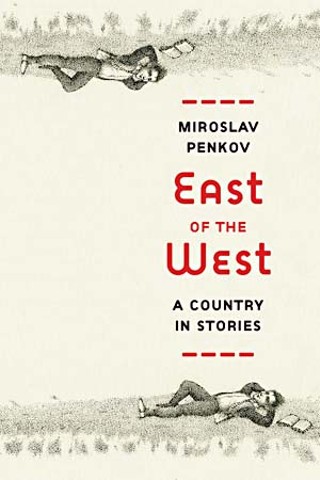
Miroslav Penkov's East of the West: A Country in Stories is a heartfelt explication of Bulgaria charting the country's quirks. Eastern Europe is ripe for weary surrealism, so many absurdities are carried out under official mandate, many of which punctuate these stories. In "The Night Horizon," the Turks in a Bulgarian town find that they are to be given Bulgarian names, later noticing that even the Turkish names on cemetery headstones have been plastered over. Boarding the bus to return to their village, Kemal says to her parents: "Nice to meet you. ... Who are you now?" Switching over into magical realism is easy when political shifts and an authoritarian government have already demonstrated a very real lack of sense. Renaming does nothing to change Kemal's prospects, but it does render her father's attempts to make a hundred bagpipes to play for her ailing mother – he heard once that such an act could cure any illness – by comparison a real act of devotion.
Unlike many young writers, Penkov is able to bring forth believable characters who don't merely reflect his own biography. What facilitates this virtuosic shape-shifting is the fact that at the heart of each story, characters must evaluate how much of the country they left behind is worth keeping, how much is possible to keep. Profound empathy allows Penkov to project that problem onto unfamiliar set-pieces with grace.
If you prefer the nonfiction route of summer disassociation or are prone to daydream narratives of stomping around Paris with a dashing Jean-Paul Belmondo type, no Rick Steves book will bring as much imaginative fodder as Paris: The Collected Traveler, Barrie Kerper's doorstopper anthology of essays on the City of Lights. Intended for leisurely perusal before a trip rather than frantic metro-station flipping, it arranges personal essays on expatriating, the favored haunts of those modernist granddaddies, and even the proper way to order a coffee.
Such propriety tidbits will be addictive for the traveler who attempts to seem like a local no matter where she goes (and no matter how untenable the prospect). I, unfortunately, am one of these, and last summer charged through Paris with my parents while trying very hard to seem French, succeeding only in being an uppity asshole on occasion. Cultural niceties seem of little importance compared with the sheer tonnage of historical information travelers take on in their preparations, but the substantive part of being away from home is never in checking sights seen off a to-do list. Paris in particular presents itself as a jeweled maze of passwords and logic puzzles, promising bliss to any traveler intrepid enough to untangle its riddles.
For precisely this reason, Paris deserves Kerper's fanatically thorough treatment. The sections devoted to food and restaurant culture are especially detailed, and the place-by-place explorations of Proust's hangouts would make a great walking tour. Kerper offers extensive bibliographies on nearly every topic – the Seine, art dealers, wines, world wars – and ends the book with a miscellany of personal favorites, if it can be believed that any of these had somehow been left out in the preceding 700 pages. Paris can wait; with Kerper as a guide, you'll be ordering petit crèmes with the best of them and raise nary an eyebrow.